Structural Drying and Dehumidification in Roseville, MI
Dry looking is not dry. After the water is out, the team maps moisture in walls, floors and framing, sets the equipment and keeps taking readings until each material reaches its dry goal.
(888) 612-9219Call about drying a wet house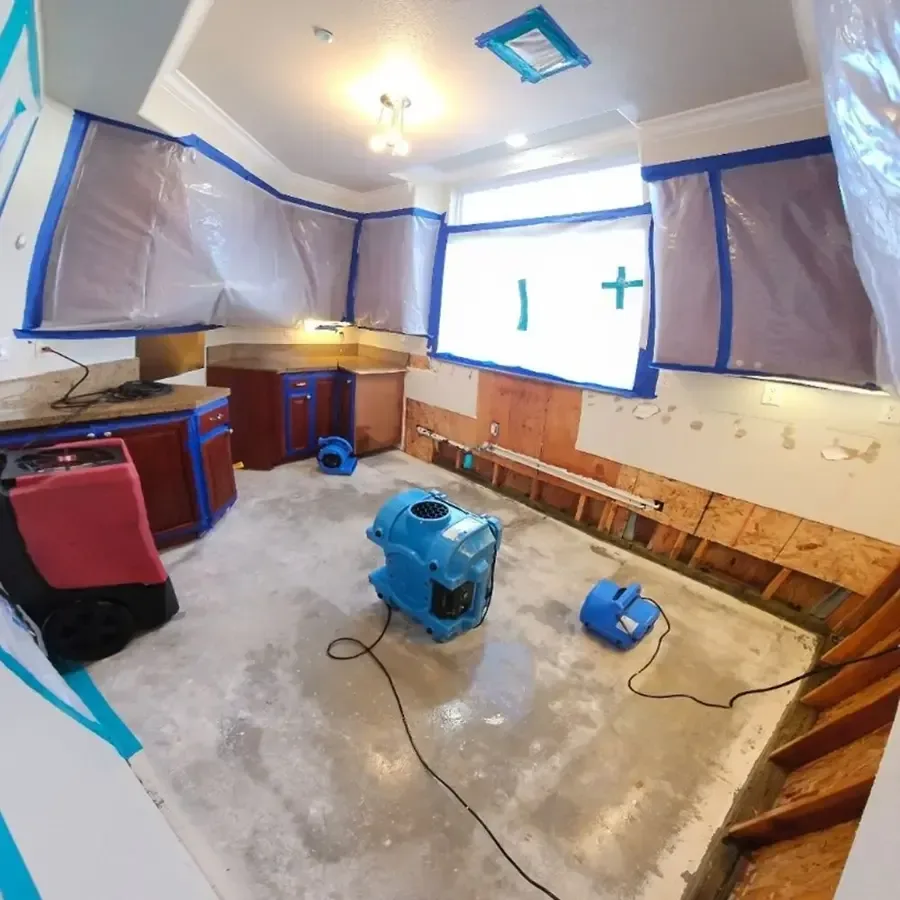
First steps when structural drying and dehumidification hits
- Stop the water. Drying cannot begin while the source is running, so the valve is closed and standing water is removed.
- Keep the heat on. Warm air takes up more moisture than cold air, so keep the heat on and close doors to the wet area.
- Leave the equipment running. Do not unplug the air movers or dehumidifiers, because they are doing the drying and the readings decide when they stop.
- Save the paperwork. Keep the moisture logs and photos together for the adjuster.
The basement of Roseville City Hall flooded in July 2019, a reminder that even a large public building can end up with wet walls and floors that need controlled drying. A house is no different: surface water is the visible part, and the real damage sits in the materials.
What does structural drying and dehumidification cost in Roseville, MI?
Drying cost follows the number of rooms, the materials involved and how many equipment days the readings require, so a short dry-out is modest and plaster, hardwood or a slab raise it.
Short dry-out
- One or two rooms of drywall and flooring
- Air movers and one dehumidifier
- A few days of daily readings
Several rooms
- Walls and floors in several rooms
- Containment sheeting and added equipment
- Written daily drying logs for the file
Dense materials
- Plaster, hardwood or a basement slab
- Desiccant units or added LGR drying
- A longer run of equipment time
Ranges are typical, not a quote: the water category, square footage, material class and how fast drying started move the number most. Run the water damage cost calculator for a closer range.
What a drying plan includes
Every room gets its own setup, because walls, floors and cavities dry at different speeds.
- Moisture mapA pin meter, pinless meter and thermal camera mark wet areas on walls and floors, so equipment goes where the water is.
- Air movementAir movers sweep air across wet surfaces and into cavities, lifting moisture off materials and into the room air.
- DehumidificationLGR and desiccant dehumidifiers pull that moisture out of the air so it does not settle back into the structure.
- ContainmentPlastic sheeting keeps the drying zone small, which saves energy and keeps dust from moving into dry rooms.
Wet walls or floors?
Extraction, drying and the claim file start with one call.
Why dense materials take longer
Plaster, hardwood, subfloor and a basement slab release water slowly, so a room can feel dry while the readings inside the material are still high. Desiccant units or extra LGR capacity speed up the dense materials, and injection drying reaches wall cavities and cabinet bases without tearing them out.
The setup follows pump-out work from water extraction and is the second half of a basement flooding job. The same method dries a ceiling cavity or a stripped kitchen.
How dry is proven
Each visit the tech records temperature, humidity and moisture content, compares wet materials with a dry reference from the same house and moves or removes equipment as the numbers fall. Drying is finished when the readings match, not when a set number of days has passed. The log shows the starting point, the daily trend and the final reading for every material, and it goes to the adjuster with the photos.
How structural drying and dehumidification is handled, step by step
Map the moisture
The tech scans walls, floors and ceilings with meters and a thermal camera and marks where readings are above the dry reference.
Set the equipment
Air movers, dehumidifiers and containment are placed room by room, sized to the volume of air and the type of material.
Adjust daily
Readings drive changes: units move, injection drying is added or containment is trimmed as materials dry at different rates.
Final readings
When every material matches the dry reference the equipment comes out, and the file holds the log, the photos and the final numbers.
What every dry-out here is held to
Rapid local response
Dispatch runs 24/7, and active water is treated as urgent at any hour, nights and holidays included.
IICRC S500 drying standard
Moisture mapping comes first, then structural drying with air movers and LGR dehumidifiers until readings reach the dry goal.
Claim-ready documentation
Moisture maps, daily psychrometric logs and timestamped photos taken before any tear-out go into the claim file.
Lakeshore water know-how
Prewar basements, combined sewers, heavy clay and ice dams shape most losses near Lake St. Clair, and the walkthrough checks for each one.
Structural drying and dehumidification across Roseville and nearby
Structural drying runs in homes across the city, including the Hayes Road area, the Blumfield Street area near I-696, the Gratiot Avenue corridor and the Common Road area.
The same service nearby: structural drying and dehumidification in Grosse Pointe, Eastpointe, Harper Woods.
Water damage restoration in Roseville › Every town covered ›
Related water damage services in Roseville
Structural Drying and Dehumidification questions in Roseville
How long does structural drying take?
A short dry-out can finish in about three days, but dense materials stretch it out, and the drying team stops only when every reading matches the dry reference.
Why is the equipment so loud and hot?
Air movers and dehumidifiers run continuously, and a dehumidifier gives off warm dry air, which is part of how moisture leaves the materials.
Can fans from a hardware store do the same job?
Household fans move air but do not remove moisture from the room, so humidity climbs and the materials stay wet. Dehumidifiers and meters are what finish the job.
What does IICRC S500 mean for drying?
It is the industry standard for water damage restoration and sets the goal of drying to a documented dry reference. The log proves the goal was met.
Is the drying log useful for insurance?
Yes. Daily readings, equipment placement and photos show the adjuster why the equipment ran for the number of days it did and when each material reached a dry goal.
Dry it to a real reading
Surface water is only part of the problem, because walls, subfloor and framing keep holding moisture until meters and dehumidifiers pull it out.
(888) 612-9219Call about drying