Ceiling Leak Water Damage in Grosse Pointe, MI
24/7 ceiling leak cleanup in Grosse Pointe, MI. The restoration team traces water from an upstairs bath, a radiator or a supply pipe, opens the ceiling only where readings show water and dries the joist bays.
(888) 612-9219Call about a leaking ceiling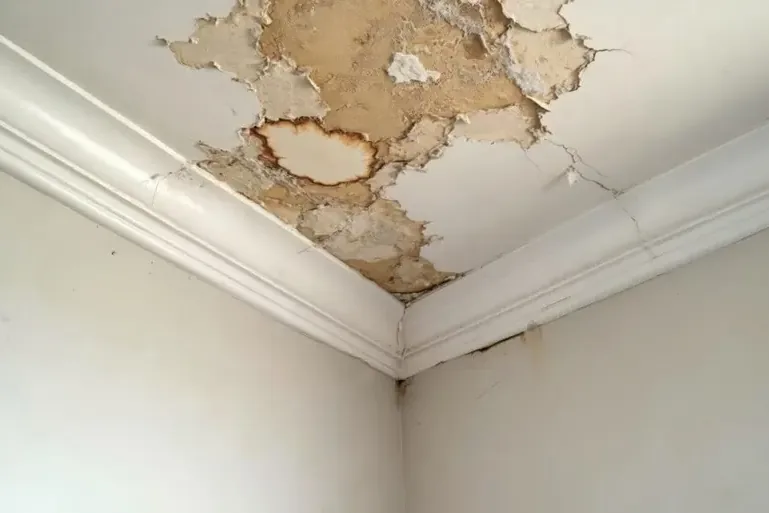
First steps when ceiling leak water damage hits
- Find and stop the source. Shut the valve under the toilet or sink above, or the main if the source is not clear.
- Kill power to wet fixtures. Turn off the breaker for any light or outlet near the water if the panel is dry.
- Stay clear of a bulging ceiling. A bulging ceiling can hold water. Keep people out from under it and catch drips in a bucket.
- Call before the joists soak. Water spreads along joists and into the walls. Drying started early keeps the opening small.
A stain spreading across a dining room ceiling usually starts in the room above. In older homes here the usual sources are a tub or shower that seeps at the drain, a toilet seal that fails, a supply pipe inside the floor or a radiator valve that drips on a hardwood floor until the water finds its way through. Unlike a roof leak, the water starts inside the house, so the team traces it from above and below before anything is opened.
What does ceiling leak water damage cost in Grosse Pointe, MI?
Ceiling leak water damage cleanup here typically runs $700 to $5,000, set by the source, how far the water spread across the ceiling and whether plaster has to come down.
Small stain
- A stain under one fixture
- Leak tracing and drying in place
- No ceiling removal
Opened ceiling
- A wet joist bay or sagging drywall
- Controlled opening and cavity drying
- Floor above dried too
Plaster and two floors
- Plaster ceilings down in several rooms
- Debris removal and framing drying
- Hardwood above and below dried
Ranges are typical, not a quote: the water category, square footage, material class and how fast drying started move the number most. Run the water damage cost calculator for a closer range.
Interior sources behind most ceiling stains
- Tub and shower drains: worn seals and grout let water into the floor below with every shower.
- Toilets: a failed wax seal or supply connection soaks the subfloor.
- Radiators and boiler piping: leaking valves and old pipe in hot-water heating systems drip into the floor.
- Second-floor laundries: washer hoses and drain pans over finished rooms, covered under washer and appliance leaks.
Stain spreading across the ceiling?
Extraction, drying and the claim file start with one call.
Plaster, light fixtures and safety
Wet plaster ceilings are heavy and can come down without much warning once they start to sag. Water near a ceiling fixture or inside a wall with wiring is an electrical hazard. The response team shuts off power to wet circuits, takes down sagging sections under control and dries the joist bay with air movers and dehumidifiers. Ceilings that are wet but sound are often dried in place through small openings.
Ceiling leak or roof leak?
Stains on the top floor after snow or wind-driven rain usually come from the roof or an ice dam, which needs a roofer first; see ice dam and roof leak water damage. Stains below a bathroom that grow after showers point to plumbing. Getting the source right keeps both the repair and the claim straight.
Helpful references: EPA WaterSense leak checks and EPA indoor air quality.
How ceiling leak water damage is handled, step by step
Trace the leak
The tech who does the walkthrough uses thermal imaging and meters to follow the water from the stain to the source.
Make it safe
Power to wet circuits is cut, and sagging sections come down under control.
Dry the joist bay
Air movers and dehumidifiers dry the ceiling cavity and the floor above.
Verify and document
Readings run daily until materials reach the dry goal, and the claim file records the source and the work.
What every dry-out here is held to
Rapid local response
Dispatch runs 24/7, and active water is treated as urgent at any hour, nights and holidays included.
IICRC S500 drying standard
Moisture mapping comes first, then structural drying with air movers and LGR dehumidifiers until readings reach the dry goal.
Claim-ready documentation
Moisture maps, daily psychrometric logs and timestamped photos taken before any tear-out go into the claim file.
Lakeshore water know-how
Prewar basements, combined sewers, heavy clay and ice dams shape most losses near Lake St. Clair, and the walkthrough checks for each one.
Ceiling leak water damage across the Pointes
Coverage takes in ZIP 48230 and 48236, from the Village on Kercheval and the Jefferson Avenue lakefront to the Mack Avenue side, plus the Park, the Farms, the Woods and the Shores.
Nearby coverage reaches Harper Woods, St. Clair Shores, Eastpointe, Roseville, Hamtramck and Detroit's east side.
Related water damage services
Ceiling Leak Water Damage questions
How do I know the leak is from the bathroom above?
If the stain grows after showers or flushing, the bath is the likely source. Thermal imaging traces the wet path through the ceiling to confirm it.
Is a wet ceiling dangerous?
A sagging plaster or drywall ceiling can fall, and water near light fixtures is an electrical hazard. Stay clear and shut off power to those circuits.
Does the whole ceiling have to come down?
Rarely. Readings show the wet area, and often only a section is opened or the cavity is dried through small holes.
Does insurance cover a ceiling leak?
Sudden leaks from pipes and fixtures are often covered, while slow leaks and worn seals may not be. Coverage depends on your policy, so check with your own insurer.
Can a radiator leak cause ceiling damage?
Yes. A dripping radiator valve can soak a hardwood floor and the ceiling below over time, especially when the heat runs all winter.
How long does a ceiling take to dry?
Two to four days is common for a drywall ceiling. Plaster and hardwood floors above take longer.
Water through the ceiling? Get it dried out.
Ceiling water spreads along joists and into walls. The restoration team traces the source and dries the cavity to a measured reading.
(888) 612-9219Call about the ceiling leak