Structural Drying and Dehumidification in Grosse Pointe, MI
24/7 structural drying in Grosse Pointe, MI. The drying team maps moisture, sets air movers and LGR dehumidifiers to the class of loss and logs readings daily until framing, plaster and concrete reach the dry goal.
(888) 612-9219Call to start structural drying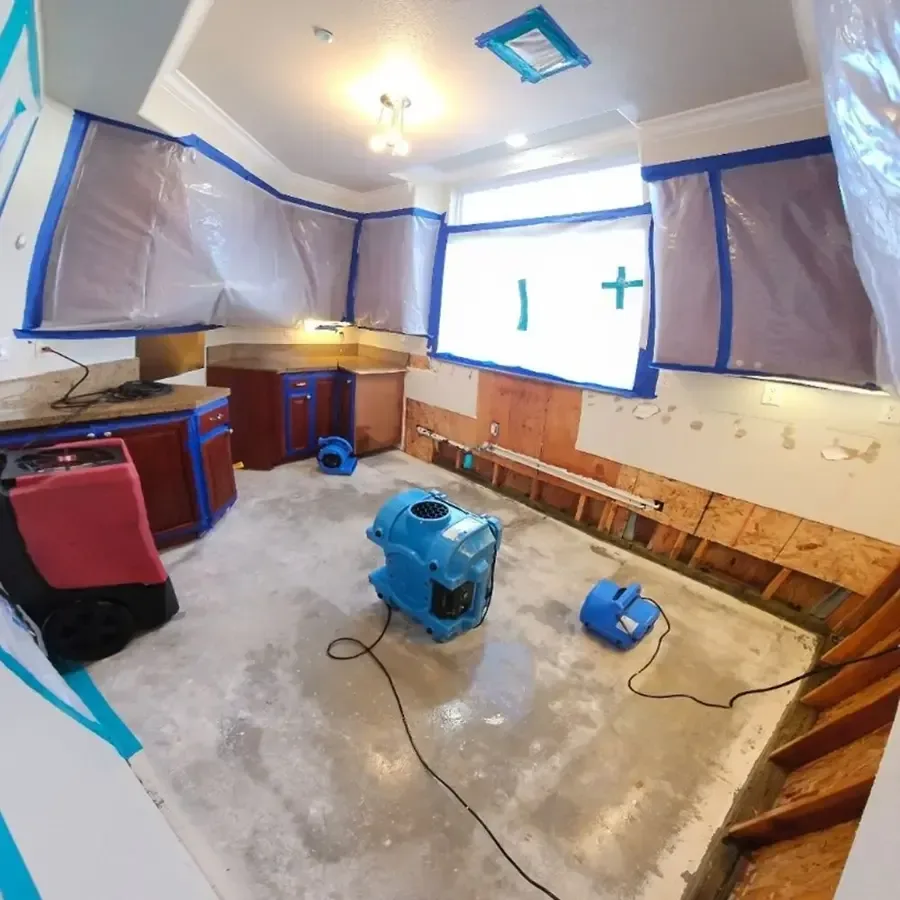
First steps when structural drying and dehumidification hits
- Remove standing water first. Drying equipment cannot keep up with puddles. Extraction comes before anything else.
- Keep the heat on. Moderate indoor heat helps drying. Keep windows shut on a humid summer day.
- Leave the equipment running. Air movers and dehumidifiers work best around the clock. Turning them off at night slows the job.
- Call for readings, not guesses. Floors can feel dry while framing and plaster stay wet. Readings decide when the job is done.
Structural drying is what separates a real dry-out from a fan and a bucket. Water soaks into framing, subfloor, plaster and concrete, and those materials hold it long after the surface feels dry. The drying team measures moisture in the materials and in the air, sets equipment to the job and keeps it running until readings match a dry reference in the same house.
What does structural drying and dehumidification cost in Grosse Pointe, MI?
Structural drying here typically runs $1,000 to $6,000, set by the class of loss, the materials involved, the number of rooms and how many days the equipment has to run.
Short dry-out
- One or two rooms, Class 1 or 2
- Air movers and an LGR dehumidifier
- About three days of readings
Several rooms
- Walls and floors across several rooms
- Containment and more equipment
- Daily psychrometric logs
Dense materials
- Plaster, hardwood or a basement slab
- Desiccant or extra LGR capacity
- Longer equipment time
Ranges are typical, not a quote: the water category, square footage, material class and how fast drying started move the number most. Run the water damage cost calculator for a closer range.
Class of loss sets the equipment
- Class 1: a small area with little absorbed water, such as part of a room.
- Class 2: a whole room, with carpet and wall bottoms wet.
- Class 3: water from above, with walls and ceilings soaked.
- Class 4: dense materials such as hardwood, plaster and concrete that need low humidity and more time, often with desiccant dehumidifiers.
Floors dry but walls still wet?
Extraction, drying and the claim file start with one call.
Plaster, hardwood and basement slabs
Prewar homes here bring the hard materials. Plaster over wood lath holds water deep and releases it slowly. Oak and maple floors cup when wet and can flatten again if drying starts early. Poured basement slabs and block walls sit against damp clay and keep wicking moisture. The local water damage experts dry these with containment, LGR or desiccant dehumidifiers and air aimed at the right surfaces, then check readings daily.
The drying log is the proof
Each day the drying team records temperature, relative humidity and grains per pound inside and outside the work area, plus readings on every wet material. Those psychrometric logs show the adjuster that the job dried on schedule and why each piece of equipment stayed. Equipment comes out when materials read within 2 to 4 points of the dry reference, not on a fixed day count. Extraction always comes first; see water extraction and removal.
Background reading: EPA indoor air quality and Michigan State University Extension.
How structural drying and dehumidification is handled, step by step
Map the moisture
The tech who does the walkthrough reads every wet material and picks a dry reference in the same house.
Set the equipment
Air movers and LGR or desiccant dehumidifiers are placed for the class of loss and each room's evaporation load.
Log daily
The drying team records psychrometric and material readings every day and moves equipment as areas dry.
Pull on readings
Equipment comes out when materials reach within 2 to 4 points of dry, and the logs go into the claim file.
What every dry-out here is held to
Rapid local response
Dispatch runs 24/7, and active water is treated as urgent at any hour, nights and holidays included.
IICRC S500 drying standard
Moisture mapping comes first, then structural drying with air movers and LGR dehumidifiers until readings reach the dry goal.
Claim-ready documentation
Moisture maps, daily psychrometric logs and timestamped photos taken before any tear-out go into the claim file.
Lakeshore water know-how
Prewar basements, combined sewers, heavy clay and ice dams shape most losses near Lake St. Clair, and the walkthrough checks for each one.
Structural drying and dehumidification across the Pointes
Coverage takes in ZIP 48230 and 48236, from the Village on Kercheval and the Jefferson Avenue lakefront to the Mack Avenue side, plus the Park, the Farms, the Woods and the Shores.
Nearby coverage reaches Harper Woods, St. Clair Shores, Eastpointe, Roseville, Hamtramck and Detroit's east side.
Related water damage services
Structural Drying and Dehumidification questions
Why does drying take several days?
Water inside framing, plaster and concrete moves to the surface slowly. Air movers and dehumidifiers speed it up, but dense materials still need time.
What does within 2 to 4 points of dry mean?
Wet materials are compared with the same material in a dry part of the house. When readings fall within 2 to 4 points of that dry reference, the material counts as dry.
What is an LGR dehumidifier?
A low grain refrigerant dehumidifier pulls more water out of the air than a household unit, which keeps drying moving even as the air gets drier.
When are desiccant dehumidifiers used?
For Class 4 losses with dense materials such as hardwood, plaster and concrete, or in cold spaces where refrigerant units slow down.
Can the equipment be turned off at night?
It works best running around the clock. Turning it off lets moisture settle back into the materials.
Is the noise and power use normal?
Yes. Air movers are loud and the equipment draws steady power. The drying team spreads the load across circuits.
Still damp after the cleanup? Get it dried right.
Framing, plaster and concrete hold water long after floors feel dry. The drying team runs equipment until readings say dry.
(888) 612-9219Call for structural drying now