Sump Pump Failure Cleanup in Grosse Pointe, MI
24/7 sump pump failure cleanup in Grosse Pointe, MI. When the pump quits in a storm and the pit overflows, the extraction crew pumps out the basement and dries floors, walls and finishes to a measured reading.
(888) 612-9219Call about a sump overflow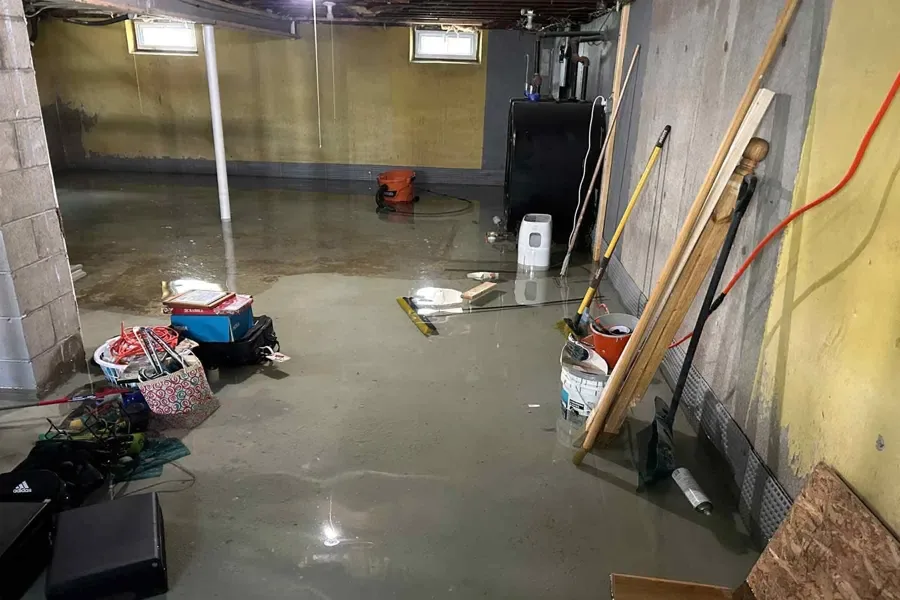
First steps when sump pump failure cleanup hits
- Check the power first. If the outage is over, see whether the pump restarts. Do not touch the pump or its cord while standing in water.
- Free the float if safe. If the pit can be reached without stepping in water, check whether the float is stuck.
- Move things off the floor. Lift boxes, rugs and electronics, and photograph the water and the pit for the claim.
- Call before it soaks the walls. Basement finishes wick water up fast. Pump-out and drying started early keep removal smaller.
A sump pump works hardest exactly when it is most likely to fail: during a long storm, when the clay around the house is saturated and the power may go out. Many homes in the Pointes, especially those with finished basements, rely on a sump pit to keep groundwater out, and when the pump stops, the pit can overflow across the floor within hours. Water from a sump pit has passed through soil and drain tile, so the mitigation team usually treats it as Category 2.
What does sump pump failure cleanup cost in Grosse Pointe, MI?
Sump pump failure cleanup here typically runs $1,000 to $8,000, set by how much water came in, whether the basement is finished and whether floor drain water mixed in.
Unfinished basement
- Water on the slab around the pit
- Pump-out and slab drying
- Category 2 cleaning
Finished basement
- Carpet, pad and paneling wet
- Removal of soaked finishes
- Cavity and slab drying
Mixed with sewer water
- Floor drain backup at the same time
- Category 3 containment and removal
- Antimicrobial and extended drying
Ranges are typical, not a quote: the water category, square footage, material class and how fast drying started move the number most. Run the water damage cost calculator for a closer range.
Why sump pumps fail in a storm
- Power outages: summer storms knock out power, and a pump without battery backup stops.
- Stuck floats: a float switch caught on the pit wall or a cord never turns the pump on.
- Worn motors: older pumps burn out under long run times.
- Frozen or blocked discharge: ice or debris in the discharge pipe sends water back into the pit.
Sump pit overflowing right now?
Extraction, drying and the claim file start with one call.
Cleanup and drying after the pit overflows
The extraction crew pumps out standing water and pulls wet carpet and pad. Paneling and drywall get readings at several heights so only the wet sections come out. Then air movers and LGR dehumidifiers run inside containment until the slab and walls match a dry reference. The pump repair or replacement is a plumbing job, and the walkthrough notes the cause for the claim file.
Backup power and the next storm
A battery or water-powered backup pump, a high-water alarm and a yearly test before storm season are common steps after an overflow. If water came up through the floor drain at the same time, it is a sewage backup and the whole area is handled as Category 3. For a broader flood, see basement flooding and water removal.
Outage readiness: Ready.gov power outage tips and National Weather Service flood safety.
How sump pump failure cleanup is handled, step by step
Pump out the basement
Submersible pumps and extraction wands clear the floor and the pit area.
Read every wall
The tech who does the walkthrough takes readings at several heights to mark what is wet.
Remove and dry
Wet pad and soaked finishes come out, and LGR dehumidifiers and air movers go in.
Log and document
Daily readings run to the dry goal, and the claim file records the cause, the water category and the work.
What every dry-out here is held to
Rapid local response
Dispatch runs 24/7, and active water is treated as urgent at any hour, nights and holidays included.
IICRC S500 drying standard
Moisture mapping comes first, then structural drying with air movers and LGR dehumidifiers until readings reach the dry goal.
Claim-ready documentation
Moisture maps, daily psychrometric logs and timestamped photos taken before any tear-out go into the claim file.
Lakeshore water know-how
Prewar basements, combined sewers, heavy clay and ice dams shape most losses near Lake St. Clair, and the walkthrough checks for each one.
Sump pump failure cleanup across the Pointes
Coverage takes in ZIP 48230 and 48236, from the Village on Kercheval and the Jefferson Avenue lakefront to the Mack Avenue side, plus the Park, the Farms, the Woods and the Shores.
Nearby coverage reaches Harper Woods, St. Clair Shores, Eastpointe, Roseville, Hamtramck and Detroit's east side.
Related water damage services
Sump Pump Failure Cleanup questions
Is sump pit water clean?
Not quite. It has passed through soil and drain tile, so it is usually treated as Category 2. If floor drain water mixed in, the whole area becomes Category 3.
Does insurance cover a sump pump failure?
Many policies need a water backup or sump overflow endorsement for this. Coverage depends on your policy, so check with your own insurer.
How fast can a basement flood after the pump stops?
It depends on how wet the ground is. In a long storm, a pit can overflow within an hour or two of the pump stopping.
Should I replace the pump myself?
A plumber or the pump maker's instructions cover the pump. The restoration team focuses on the water damage it caused.
Can carpet be saved after a sump overflow?
Sometimes, if the water was not contaminated and drying starts quickly. Pad usually comes out.
How long does drying take?
Three to five days is common. Finished basements and block walls take longer.
Pump quit in the storm? Get the water out.
Sump water spreads across the slab and into finishes fast. The extraction crew pumps it out and dries the basement to a measured reading.
(888) 612-9219Call about the sump overflow