Structural Drying and Dehumidification in Eastpointe, MI
After the water is gone, moisture stays in framing, subfloor and concrete. The drying team sets equipment, reads the numbers each visit and keeps going until the materials, not the surface, are dry.
(888) 612-9219Call about drying equipment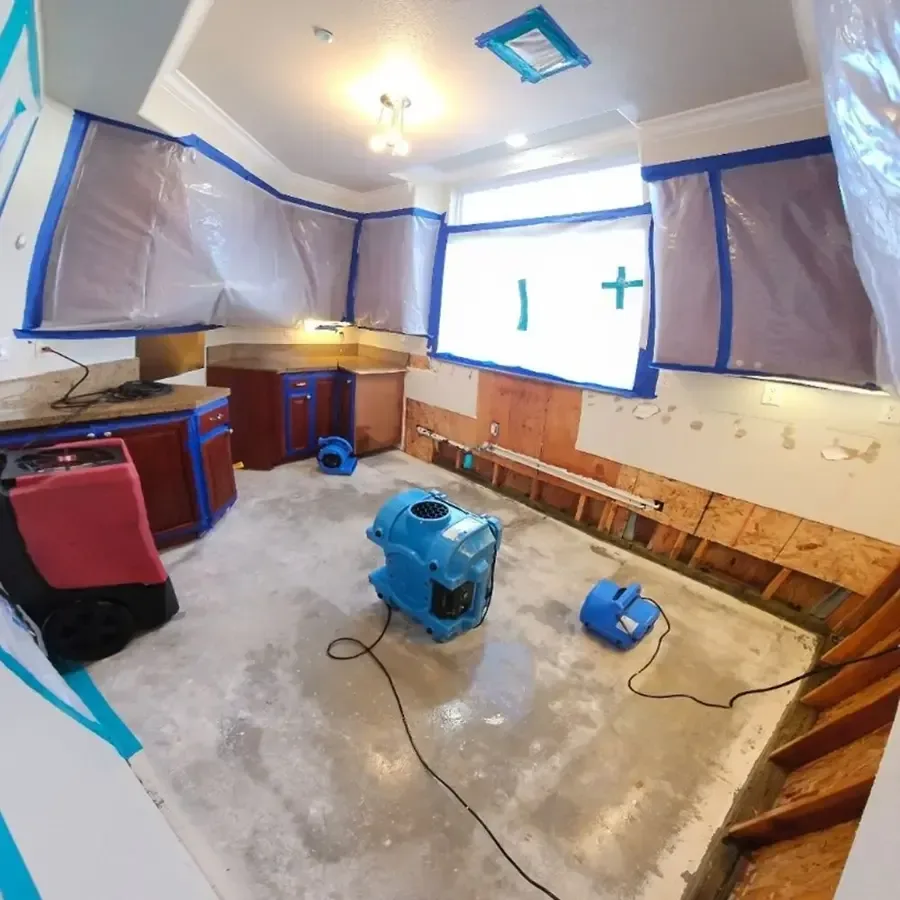
First steps when structural drying and dehumidification hits
- Stop new water. Make sure the source is repaired or shut off before equipment is set.
- Leave equipment running. Fans and dehumidifiers may be loud, but turning them off lets the moisture return.
- Keep doors closed. Closing the drying area helps the dehumidifiers work on a smaller volume of air.
- Allow return visits. The tech returns to take readings and may move equipment as areas dry.
A 2009 Michigan State University report on Eastpointe put the median construction year of owner-occupied homes at 1954, so older framing, plaster and hardwood are likely to be part of a drying job. Drying follows the same method as in any older home, but the readings matter more because dense materials release moisture slowly.
What does structural drying and dehumidification cost in Eastpointe, MI?
Drying cost follows the size of the wet area, the class of materials and how long equipment must run. Typical ranges for these dry outs appear below.
Short dry-out
- One or two rooms of low-class damage
- Fans and LGR dehumidification
- Readings over about three days
Several rooms
- Walls and floors in several rooms
- Containment and added equipment
- Psychrometric logs every visit
Dense materials
- Plaster, hardwood or a basement slab
- Desiccant or extra LGR capacity
- Longer equipment time
Ranges are typical, not a quote: the water category, square footage, material class and how fast drying started move the number most. Run the water damage cost calculator for a closer range.
How a dry-out is run
Drying begins after water extraction and is a controlled process rather than a pile of fans. Four things are managed at once.
- Air movement. Fans push dry air across wet surfaces and into cavities through small openings.
- Dehumidification. LGR dehumidifiers pull moisture out of the air, and desiccant units are added for cold or very wet spaces.
- Containment. Plastic sheeting limits drying to the wet area so equipment works on the right volume.
- Readings. Temperature, humidity and moisture content are recorded each visit and compared with dry reference materials.
Moisture left behind causes later damage
Extraction, drying and the claim file start with one call.
Dense materials dry slowly
Plaster, hardwood and a concrete slab release moisture over days, not hours, and a surface that feels dry can still read wet inside. The team uses injectors for closed spaces, extra dehumidifier capacity and longer equipment time where the readings call for it, instead of stopping when the room feels comfortable.
Mold can begin within 24 to 48 hours in damp materials, which is why equipment is placed on the first visit.
Readings that end the job
Equipment is removed only when readings match dry standards for each material, and the daily log shows how the numbers fell. That log, with photos, goes to the adjuster as proof the drying was complete, so rebuilding can start without hidden moisture behind new finishes. A basement slab after basement flooding is usually the last surface to reach its goal.
How structural drying and dehumidification is handled, step by step
Moisture survey
Meters and a thermal camera map the wet materials, and the tech records temperature and humidity as the starting point.
Equipment plan
Fans, LGR units and any desiccant dehumidifiers are sized to the wet volume and placed to move air across the wet surfaces.
Monitor and adjust
Each visit adds readings, and equipment is moved or removed as rooms reach dry targets.
Final log
Dry readings for every material are logged with the equipment record and photos, then packaged for the adjuster.
What every dry-out here is held to
Rapid local response
Dispatch runs 24/7, and active water is treated as urgent at any hour, nights and holidays included.
IICRC S500 drying standard
Moisture mapping comes first, then structural drying with air movers and LGR dehumidifiers until readings reach the dry goal.
Claim-ready documentation
Moisture maps, daily psychrometric logs and timestamped photos taken before any tear-out go into the claim file.
Lakeshore water know-how
Prewar basements, combined sewers, heavy clay and ice dams shape most losses near Lake St. Clair, and the walkthrough checks for each one.
Structural drying and dehumidification across Eastpointe and nearby
Drying work covers the whole city, from houses near the Gratiot Avenue corridor to the blocks around Kennedy Memorial Park, Saxony Avenue, Beaconsfield Avenue and the Nine Mile Road corridor.
The same service nearby: structural drying and dehumidification in Grosse Pointe, Harper Woods, Roseville.
Water damage restoration in Eastpointe › Every town covered ›
Related water damage services in Eastpointe
Structural Drying and Dehumidification questions in Eastpointe
How long does structural drying take?
Most short dry-outs run about three days, and plaster, hardwood or a basement slab can take longer. Readings decide the end date, not the calendar.
Why are the fans left running?
Moisture leaves materials slowly, and stopping equipment early lets it return to the surface. The machines keep air moving until readings match dry goals.
What is a psychrometric log?
It records air temperature, relative humidity and moisture content each visit, showing whether the drying is working and when it can stop.
Why do dehumidifiers matter?
Fans alone move wet air around. Dehumidifiers remove the moisture so the air can keep absorbing more from the walls and floor.
Can older plaster and hardwood be dried?
Often, with injectors, extra equipment time and patience. The readings show whether the material is recovering or needs to be replaced.
Who sees the drying records?
The adjuster receives the log, photos and equipment record, and the homeowner keeps a copy for the claim file.
Finish the dry-out before rebuilding
Dispatch takes the details day and night, and the drying team sets fans, dehumidifiers and meters and logs the numbers until the materials are dry.
(888) 612-9219Schedule a dry-out visit