Basement Flooding and Water Removal in Eastpointe, MI
A flooded basement in a combined sewer district needs the water removed fast and the source identified, because stormwater and sewer flow can look alike at the drain.
(888) 612-9219Call about the flooded basement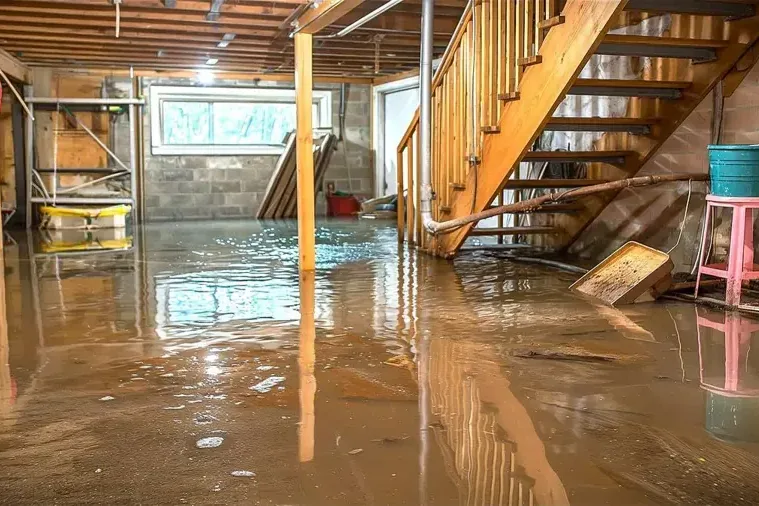
First steps when basement flooding and water removal hits
- Check for hazards. Keep power off to a wet basement and do not wade into water that smells of sewage. Shut off the supply if a pipe may be the cause.
- Call for pump-out. Standing water spreads into drywall and wood, so extraction starts before cleanup. Describe the depth, where the water entered and whether a floor drain is involved.
- Save and record. Photograph the water level and damaged items before anything is moved, and set aside samples of wet materials the adjuster may ask about.
- Get drying moving. Lift small items off the wet floor and open doors for airflow if power is safe, then let the crew handle the heavy equipment.
A basement in the St. Clair Shores and Eastpointe sewer district can take on water from rain, a drain or a failed pump, and the first job is working out which. The county has said some basements still flooded in June 2021, even with its pump station bypass open and thousands of others spared. The crew starts with extraction, then sorts clean water from sewage-tinged water.
What does basement flooding and water removal cost in Eastpointe, MI?
Basement jobs depend on the depth, the water category and how much finished material is wet. The ranges below are typical, and the moisture survey sets the final scope.
Unfinished basement
- Water over a bare slab and block walls
- Pump-out, cleaning and slab dry-out
- Clean or gray water caught early
Finished basement
- Carpet, pad or paneling soaked
- Wet finishes removed, cavities dried
- Several days of dehumidification
Sewage or deep water
- Floor drain backup or deep water
- Containment and Category 3 removal
- Antimicrobial treatment before drying
Ranges are typical, not a quote: the water category, square footage, material class and how fast drying started move the number most. Run the water damage cost calculator for a closer range.
What a flooded basement needs first
Four early steps decide whether the job stays small or grows into a rebuild.
- Find the source. Rain through a window well, a backed-up floor drain and a stopped sump pump leave different water, so the team checks each before choosing between clean-water and contaminated-water handling.
- Pump out. Submersible pumps and truck-mounted extraction clear deep water, then wands lift what remains from the slab and carpet while the tech marks the wet zones.
- Strip wet finishes. Soaked carpet, pad and bottom drywall come out when they cannot dry in time, and cabinets or paneling get toe-kick openings for airflow.
- Dry down. Dehumidifiers and fans run until meter readings match dry reference materials.
A flooded basement cannot wait for tomorrow
Extraction, drying and the claim file start with one call.
Why a combined sewer district changes the plan
The sewer system serving this district carries stormwater and sanitary flow in the same pipes. When heavy rain fills it, the county has said, the flow needs somewhere to go, and the Chapaton bypass to Lake St. Clair spared thousands more basements in June 2021 and again in late August 2023.
Water that does enter a basement is treated as possibly contaminated until proven otherwise. Porous materials touched by it are removed, and hard surfaces are cleaned and treated before drying equipment goes in.
How drying works on slabs and block walls
Concrete and block hold water long after the surface looks dry. The drying team places LGR dehumidifiers and fans for a first round, takes readings on the slab and the lower wall each visit, and adjusts equipment as the numbers fall. Finished walls get small openings so air reaches the cavity. Most basements need about three days of equipment time, and longer when plaster, paneling or a thick slab slows the dry-out. Equipment leaves only when readings match the dry standard, and the file closes with photos, readings and a plain summary for the adjuster.
How basement flooding and water removal is handled, step by step
Water type check
The tech notes where the water came from, how it looks and smells, and assigns a category before any equipment is set.
Moisture map
Meters and a thermal camera trace the wet zones across the slab, block walls and framing above, so removal stays targeted.
Tear-out and drying
Wet carpet, pad and lower drywall are removed, then dehumidifiers and fans run with readings taken on each visit.
Readings and records
Final readings are compared with dry reference materials, and the photos and logs are packaged for the insurance file.
What every dry-out here is held to
Rapid local response
Dispatch runs 24/7, and active water is treated as urgent at any hour, nights and holidays included.
IICRC S500 drying standard
Moisture mapping comes first, then structural drying with air movers and LGR dehumidifiers until readings reach the dry goal.
Claim-ready documentation
Moisture maps, daily psychrometric logs and timestamped photos taken before any tear-out go into the claim file.
Lakeshore water know-how
Prewar basements, combined sewers, heavy clay and ice dams shape most losses near Lake St. Clair, and the walkthrough checks for each one.
Basement flooding and water removal across Eastpointe and nearby
Basement work runs across the city, from homes near the Gratiot Avenue corridor to blocks around Memorial Park, Kennedy Memorial Park and the Nine Mile Road corridor.
The same service nearby: basement flooding and water removal in Grosse Pointe, Harper Woods, Roseville.
Water damage restoration in Eastpointe › Every town covered ›
Related water damage services in Eastpointe
Basement Flooding and Water Removal questions in Eastpointe
Did the county bypass prevent basement flooding?
The county said the Chapaton bypass spared thousands more basements in June 2021, yet it also acknowledged flooding in some spots. A bypass lowers the risk without removing it.
How deep can water get before the job changes?
Shallow water on a slab clears quickly. Several inches or deep water brings submersible pumps, a larger crew and a contamination check first.
Should a wet basement be treated as sewage?
Water that came through a floor drain, or during a storm that overloaded the sewer, is handled as Category 3 until the team decides otherwise. Rain through a window well is usually Category 2.
What happens to drywall and carpet?
Pad and the bottom of wet drywall usually come out, while carpet itself can sometimes be saved with fast extraction and drying. Contaminated finishes are removed above the water mark.
How long does basement drying take?
About three days of equipment time is common for a short job, and longer for finished walls or a thick slab. Readings decide when it ends.
Does insurance cover basement flooding?
Coverage varies by policy and cause. Sewer backup and surface water are often handled under separate terms, so the file should show the source clearly.
Get the water out before the framing soaks it up
Dispatch takes the details day and night, then the team brings pumps, extractors and drying equipment and starts the moisture map.
(888) 612-9219Book the basement pump-out