Sewage Backup and Floor Drain Cleanup in Roseville, MI
Dirty water from a floor drain or an overwhelmed sewer is contaminated from the start, so the team contains the area, removes the water and disinfects before any drying begins.
(888) 612-9219Call about sewage in the house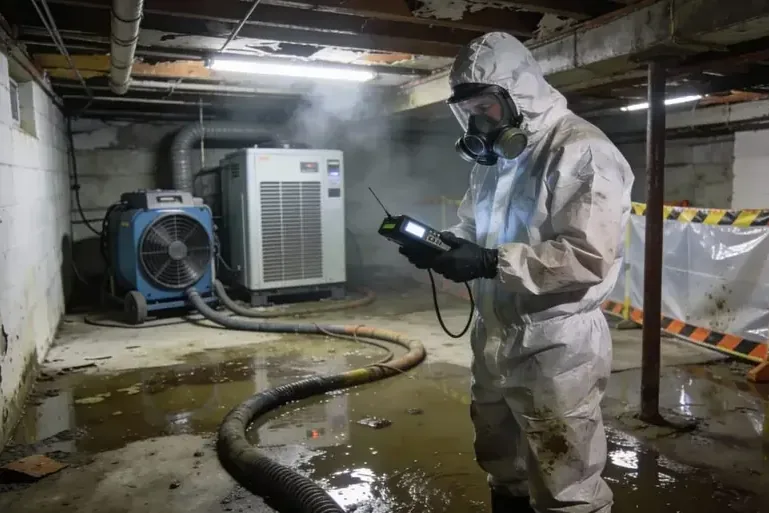
First steps when sewage backup and floor drain cleanup hits
- Keep out and keep air moving. Stay out of the room, keep children and pets away, and do not run washers or flush toilets that feed the same drain.
- Skip the shop vac. A household vacuum spreads bacteria into the air, so leave the liquid alone and wait for proper extraction.
- Record it. Photograph the water, the drain and affected belongings before anything is touched, and note when the backup began.
- Call for containment. Early containment and removal keep the contamination from reaching clean rooms and porous materials that might otherwise be saved.
Sewage that comes up a floor drain carries bacteria into everything it touches. Macomb Daily reports that the Martin Retention Basin handles combined sewer flow from the city, and when heavy rain stresses a combined system, dirty water can come back up basement floor drains. The July 2019 flash flood left sewage in basements on Blumfield Street near I-696. Treat it as a hazard, not a mop-up.
What does sewage backup and floor drain cleanup cost in Roseville, MI?
Sewage work costs more than clean water because of the protective gear, containment, disposal and disinfecting involved, and the depth and spread of the backup set where it lands in the range.
Small drain backup
- A thin film on a bare concrete floor
- Containment, scrubbing and antimicrobial
- Almost nothing porous to remove
Finished basement backup
- Soiled carpet, wall board and trim
- Cut-out above the wet mark and disposal
- Full Category 3 drying and checks
Deep or long-standing backup
- Inches of water over the entire level
- Heavy removal, hauling and disposal
- Longer drying and clearance testing
Ranges are typical, not a quote: the water category, square footage, material class and how fast drying started move the number most. Run the water damage cost calculator for a closer range.
What the first containment step involves
Before any cleaning, the team keeps contamination from spreading to clean rooms.
- Zone controlPlastic sheeting and negative air keep dust and spray out of living space while the work goes on.
- Protective gearGloves, boots, suits and respirators protect the crew, and anything worn inside is bagged on the way out.
- ExtractionPumps and extractors, the same gear used in water extraction, remove the liquid, and wash-down water is pulled up too instead of left to soak the slab.
- DisposalContaminated pad, drywall and insulation are bagged and hauled away.
Sewage in the house?
Extraction, drying and the claim file start with one call.
What gets removed and what gets cleaned
Porous materials such as carpet, pad, insulation and drywall that touched sewage are removed because bacteria cannot be washed out of them. Hard surfaces, concrete and framing are scrubbed with detergent, then treated with an antimicrobial and left to dry. The cut height on the wall is set above the highest wet mark.
Every cut and disposal step is photographed so the insurance file shows what was removed and why, and the carrier can ask for more detail.
Drying and clearance after sewage
Once the contaminated materials are out, the structure still has to dry, using the same method as structural drying. Air movers and dehumidifiers run until moisture readings match a dry reference, and the team confirms surfaces are clean before any rebuild begins. The Southeast Macomb Sanitary District operates trunk sanitary sewers in the city, but what happens inside the home starts at the floor drain and ends with documented readings.
How sewage backup and floor drain cleanup is handled, step by step
Assessment
The tech checks the extent of the contamination, the likely source and the safest route in and out before work begins.
Containment
Sheeting seals the work zone, protective gear goes on and the extraction crew removes liquid and sludge.
Removal and cleaning
Porous items come out, and structure is scrubbed, treated and rinsed in stages so cleaning does not drive contamination deeper.
Drying and sign-off
Equipment dries the shell while readings are logged, and the finished surfaces are inspected and photographed before the setup comes down.
What every dry-out here is held to
Rapid local response
Dispatch runs 24/7, and active water is treated as urgent at any hour, nights and holidays included.
IICRC S500 drying standard
Moisture mapping comes first, then structural drying with air movers and LGR dehumidifiers until readings reach the dry goal.
Claim-ready documentation
Moisture maps, daily psychrometric logs and timestamped photos taken before any tear-out go into the claim file.
Lakeshore water know-how
Prewar basements, combined sewers, heavy clay and ice dams shape most losses near Lake St. Clair, and the walkthrough checks for each one.
Sewage backup and floor drain cleanup across Roseville and nearby
Sewage cleanup covers the city, including homes along Gratiot Avenue, the Hayes Road and I-696 service drive area, the Thirteen Mile Road and Little Mack Avenue area and the Common Road area.
The same service nearby: sewage backup and floor drain cleanup in Grosse Pointe, Eastpointe, Harper Woods.
Water damage restoration in Roseville › Every town covered ›
Related water damage services in Roseville
Sewage Backup and Floor Drain Cleanup questions in Roseville
Is it safe to stay home with a sewage backup?
Not in the affected area. Keep everyone out of the room and off the floor until the contaminated water and porous materials are removed and the surfaces are treated.
Why does sewage come up the floor drain after heavy rain?
When a combined sewer system takes on more stormwater than it can carry, flow can reverse into low drains. A city report refers to a combined sewer and storm water system.
Can the carpet be cleaned after sewage?
No. Carpet and pad that sewage touched are removed and discarded, because bacteria soak into the fibers and the cushion and cannot be rinsed out.
What is Category 3 water?
It is the most contaminated class, covering sewage, rising floodwater and water from toilets beyond the trap. It needs protective gear, removal of porous items and disinfecting.
How long does cleanup take?
Containment and removal usually fit into a day or two, and drying adds several more days depending on how much was wet. Readings decide the end date.
Does insurance cover a sewer backup?
Coverage depends on the policy, and many carriers treat sewer backup as an optional add-on. The adjuster decides, and the photos, moisture logs and disposal records support the claim.
Keep sewage out of clean rooms
Contamination spreads through porous materials and shoes and hands, so early containment and removal protect the rooms that are still clean and the people living in them.
(888) 612-9219Call about sewage cleanup