Structural Drying and Dehumidification in Center Line, MI
After the water is out, the structure still holds moisture. The drying team sets air movers and dehumidifiers, takes daily readings and keeps going until framing, floors and walls reach their dry targets.
(888) 612-9219Plan the dry-out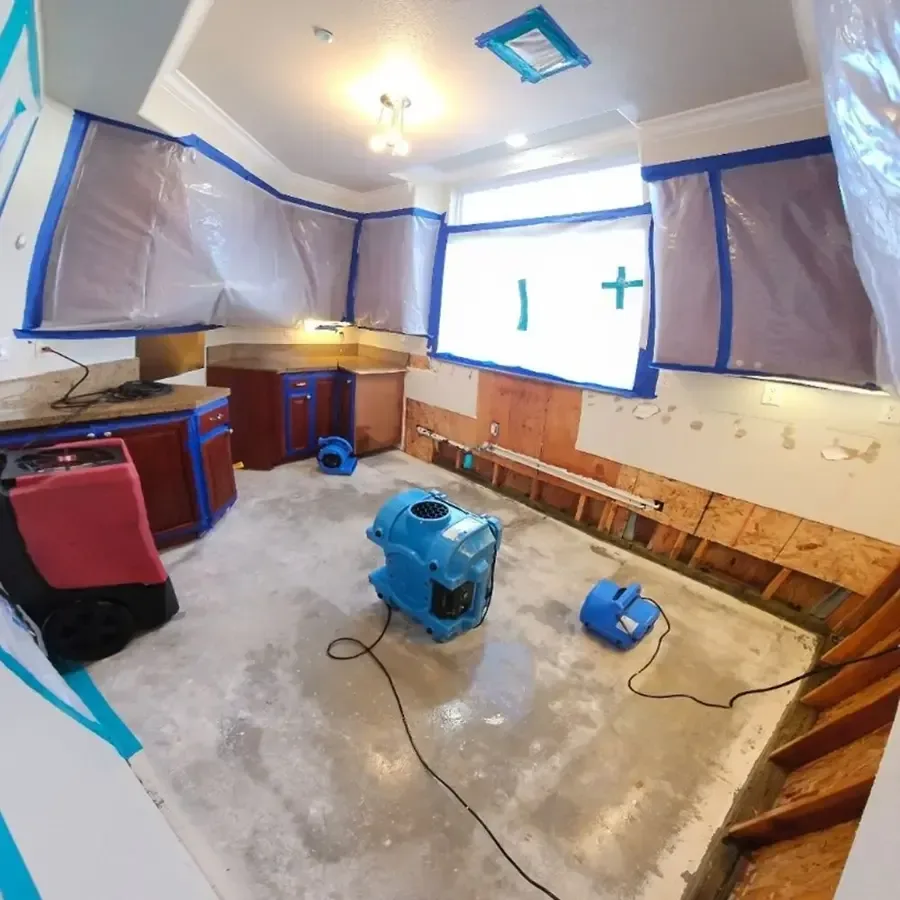
First steps when structural drying and dehumidification hits
- Hold off on repairs. Do not cover wet drywall or flooring with paint, new carpet or trim until the readings say the structure is dry.
- Keep doors closed. Leave the drying zone shut so the dehumidifiers work on the wet space, and keep pets and children out.
- Leave equipment alone. Do not move or unplug the machines, and expect a warm, humming house while they run.
- Be there for readings. Allow the tech into the space each visit, so the numbers drive the next adjustment.
Structural drying is the long part of a water loss. Wet framing, subfloor and drywall look dry well before they are, and closing them up too early invites rot and mold. The method is simple in principle: move dry air across the surface, pull the moisture out of the room and measure until the numbers prove it worked.
What does structural drying and dehumidification cost in Center Line, MI?
Drying cost depends on how many rooms are wet, how dense the materials are and how long equipment must run, so plaster, hardwood and concrete cost more than a simple carpeted room.
Short dry-out
- One or two rooms, light materials
- Fans and a dehumidifier
- A few days of readings
Several rooms
- Walls and floors across the level
- Containment and more machines
- Logged readings each visit
Dense materials
- Plaster, hardwood or a basement floor
- Desiccant or added capacity
- Longer equipment time
Ranges are typical, not a quote: the water category, square footage, material class and how fast drying started move the number most. Run the water damage cost calculator for a closer range.
How the equipment works together
Each machine does a different job, and they only work well as a set.
- Air moversFans push air across wet floors and lower walls so moisture leaves the surface and enters the air.
- DehumidifiersRefrigerant units pull the moisture out of the air, and desiccant units handle cold or dense materials.
- ContainmentPlastic sheeting keeps the drying zone small, so the machines work on the wet space instead of the whole house.
- InjectorsSmall ports push air into wall cavities so walls can dry without full removal.
Water out but walls still wet?
Extraction, drying and the claim file start with one call.
Why the median home matters
The median Center Line home was built in 1960, and about half of the city's housing units predate it. Walls from that era often hold several layers of finish, so the drying plan is documented through the framing and finished surfaces, not just the visible face. Readings on both sides of a wall show whether it is truly dry.
The method is the same as in any older home, but the patience is greater.
Readings, targets and the final check
Each visit, the tech records temperature and humidity in the room and moisture content in the wettest materials, then adjusts equipment placement. Dry targets come from unaffected materials in the same building, so the result is judged against the house itself. When every surface reaches target, the machines come out and the log goes into the file for the adjuster. Wet floors often begin with water extraction, and a flooded lower level is covered under basement flooding cleanup.
How structural drying and dehumidification is handled, step by step
Map the moisture
Meters and thermal imaging show which materials are wet, and a baseline reading is taken from unaffected areas for comparison.
Place the equipment
Air movers and dehumidifiers are sized to the wet volume, with containment where needed and injectors for closed cavities.
Monitor and adjust
Each visit the tech records room conditions and material readings, then moves, adds or removes machines to keep progress steady.
Confirm dry
Every wet material is checked against its dry target, the equipment is removed and the log, photos and notes are handed over.
What every dry-out here is held to
Rapid local response
Dispatch runs 24/7, and active water is treated as urgent at any hour, nights and holidays included.
IICRC S500 drying standard
Moisture mapping comes first, then structural drying with air movers and LGR dehumidifiers until readings reach the dry goal.
Claim-ready documentation
Moisture maps, daily psychrometric logs and timestamped photos taken before any tear-out go into the claim file.
Lakeshore water know-how
Prewar basements, combined sewers, heavy clay and ice dams shape most losses near Lake St. Clair, and the walkthrough checks for each one.
Structural drying and dehumidification across Center Line and nearby
Drying crews work across all of Center Line, from older houses on the side streets to apartments and commercial buildings along Van Dyke Avenue and the Ten Mile Road corridor.
The same service nearby: structural drying and dehumidification in Grosse Pointe, Eastpointe, Roseville.
Water damage restoration in Center Line › Every town covered ›
Related water damage services in Center Line
Structural Drying and Dehumidification questions in Center Line
How long does structural drying take?
Most losses take several days, but the readings set the timeline. Dense materials like hardwood and concrete need longer than carpet and drywall.
Why is the house so warm and loud?
Dehumidifiers and air movers give off heat and noise while they work. That is normal, and it ends when the structure reaches dry targets.
Can I stop the equipment early?
Doing so risks leaving moisture trapped in the framing, which can lead to rot and mold, so the machines stay until the readings are met.
Do walls always have to be opened?
Not always. Injectors can dry many wall cavities through small holes, and openings are used only where moisture cannot be reached otherwise. That keeps more of the finished wall intact.
What does the drying log show an adjuster?
It shows daily conditions, material readings and equipment counts, which together prove the structure was dried to the standard.
Dry the structure, then prove it
Describe what flooded and how long the water sat, and the team will size the equipment and set up daily readings.
(888) 612-9219Set up the dry-out