Water Extraction and Removal in Center Line, MI
Standing water is pulled out with truck-mounted and portable extractors, and carpet and pad are checked, so older floors and finishes in the house are protected while the drying starts.
(888) 612-9219Request water extraction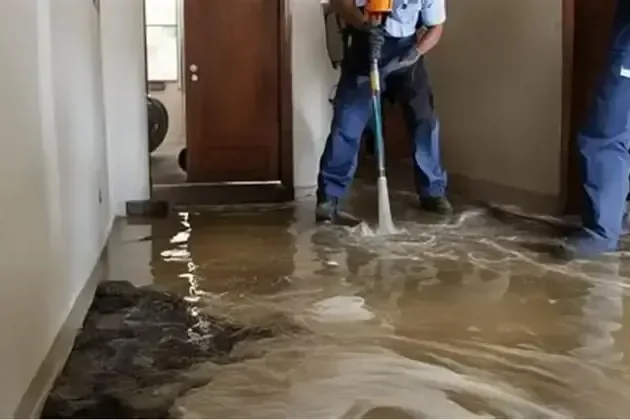
First steps when water extraction and removal hits
- Make it safe. Shut off power to the wet area at the breaker if the panel is dry, and stay out of standing water.
- Stop the source. Close the valve, stop the appliance or note where storm water is entering so the flow does not continue.
- Lift what you can. Raise furniture and boxes onto blocks and roll up rugs that are not soaked.
- Report the depth. Tell the crew how deep the water is and where, so the right pumps and extractors come.
Removing the water is the step that decides how big the rest of the job becomes. Every hour a pool sits on a floor, it wicks into baseboards, carpet and framing. Extraction pulls out what a mop cannot, and it does so before drying equipment starts to work on the moisture left behind.
What does water extraction and removal cost in Center Line, MI?
Extraction cost follows the volume of water, how many rooms it covers and whether it is clean or contaminated, so a single wet room costs a fraction of a flooded level.
Single room
- Clean water on one floor
- Portable or truck-mounted pickup
- Pad condition checked
Basement level
- Inches of water over a floor
- Submersible pumping
- Carpet and pad extracted
Large or contaminated
- Several rooms or deep water
- Contaminated water handled with care
- Added crew and disposal
Ranges are typical, not a quote: the water category, square footage, material class and how fast drying started move the number most. Run the water damage cost calculator for a closer range.
Truck-mounted and portable gear
The right tool depends on how much water there is and where it sits.
- Truck-mounted unitsStrong vacuum power pulls large volumes from carpet and flooring through a hose run from the vehicle.
- Portable extractorsCompact units carry into basements, second floors and tight rooms where hoses cannot reach.
- Submersible pumpsPumps drop into deep water and move it out through a discharge hose in stages.
- Weighted wandsHeavy tools press water from carpet and pad so the pad can often be saved.
Standing water in the house?
Extraction, drying and the claim file start with one call.
Gentle handling of older finishes
About half of the city's housing units were built before 1960, and older hardwood, trim and plaster react badly to rough treatment. The crew works slowly around thresholds and baseboards, lifts rugs and furniture first and avoids dragging heavy equipment across damaged flooring. Clean water allows more finishes to be saved, which is why speed matters.
Once the surface water is gone, readings show what is still wet underneath.
When extraction is only the first step
Pulled water leaves moisture behind in carpet pad, subfloor, drywall and framing, so extraction hands off to structural drying with air movers and dehumidifiers. Contaminated water changes the plan, since sewage or flood water requires disposal of porous items and antimicrobial cleaning. A flooded basement is the classic example, covered under basement flooding cleanup. Photos of the water depth before and after, and a list of what was removed, belong in the file for the adjuster.
How water extraction and removal is handled, step by step
Size up the water
The tech measures depth, finds the source and sorts the water into clean, gray or contaminated before choosing equipment.
Pump and extract
Submersible pumps handle depth, then extractors work the carpet, pad and hard floors in overlapping passes.
Check what stayed wet
Meters probe the subfloor, baseboards and lower walls to show how far water wicked past the surface.
Hand off to drying
Findings go to the drying plan, with photos of the before and after condition kept for the file.
What every dry-out here is held to
Rapid local response
Dispatch runs 24/7, and active water is treated as urgent at any hour, nights and holidays included.
IICRC S500 drying standard
Moisture mapping comes first, then structural drying with air movers and LGR dehumidifiers until readings reach the dry goal.
Claim-ready documentation
Moisture maps, daily psychrometric logs and timestamped photos taken before any tear-out go into the claim file.
Lakeshore water know-how
Prewar basements, combined sewers, heavy clay and ice dams shape most losses near Lake St. Clair, and the walkthrough checks for each one.
Water extraction and removal across Center Line and nearby
Extraction crews work across all of Center Line, from houses on the side streets to apartment buildings and the commercial properties on Van Dyke Avenue and Ten Mile Road.
The same service nearby: water extraction and removal in Grosse Pointe, Eastpointe, Roseville.
Water damage restoration in Center Line › Every town covered ›
Related water damage services in Center Line
Water Extraction and Removal questions in Center Line
Can a shop vacuum do the same job?
A shop vacuum handles a spill, but it cannot move the volume or reach the pad and subfloor. Extractors pull far more water and leave less behind.
Will carpet need to be replaced?
Not always. Carpet soaked by clean water and extracted quickly can often be saved, while contaminated water means the carpet is discarded.
Is extraction enough to dry the house?
No. It removes standing water, but the materials hold moisture afterward, so air movers and dehumidifiers finish the job.
Is storm water handled differently?
Yes. Flood water crosses yards and drains, so it is treated as contaminated and porous materials it soaked usually come out.
What should be moved before the crew arrives?
Lift small furniture, electronics and papers off wet floors, and leave heavy pieces for the crew, who can lift them with blocks and protection so nothing is dragged across wet flooring.
Pull the water out first
Tell the team how deep the water is and which rooms are covered, and pumps and extractors will be matched to the job.
(888) 612-9219Report standing water