Sewage Backup and Floor Drain Cleanup in Center Line, MI
Sewage that rises through a floor drain is a health hazard, so the area is contained, the water removed, and every touched surface cleaned and disinfected before drying begins.
(888) 612-9219Report a sewer backup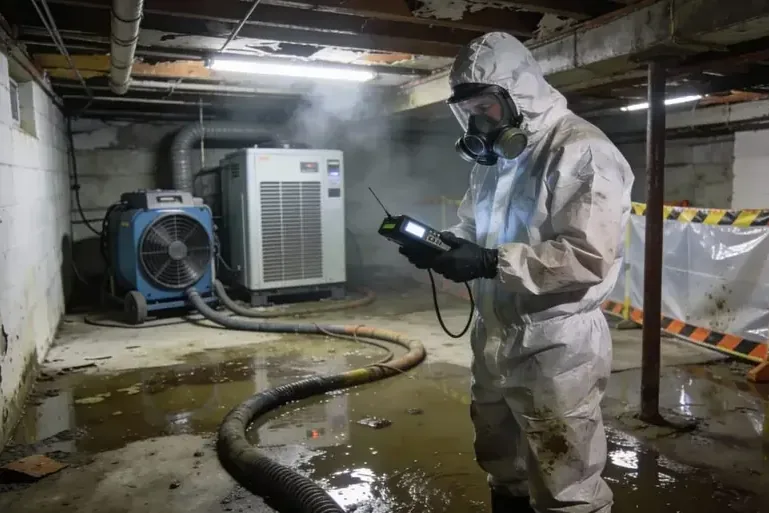
First steps when sewage backup and floor drain cleanup hits
- Leave the area. Keep people and pets away from the water, avoid touching it, and do not run drains, showers or the washer while sewage is present.
- Shut off power. If the breaker panel is dry and reachable, turn off circuits to the wet area. Otherwise leave that to the crew.
- Photograph first. Capture the drain, the water mark on the walls and affected belongings, and write down the date the backup was found.
- Send the notice. Submit the city's written notice form within 45 days and tell the insurer so the loss is on file.
Sewage backs into a house through a floor drain, a basement toilet or a tub, and the water carries bacteria that soak into carpet, drywall and stored boxes. The first priority is keeping everyone out of it, which is why basement flooding cleanup and sewage work are planned differently. Cleanup then follows a strict order: contain, remove, disinfect and dry. Anything porous that touched the water is treated as waste.
What does sewage backup and floor drain cleanup cost in Center Line, MI?
Sewage jobs cost more than clean-water leaks because of containment, disposal and disinfecting. Depth, the amount of porous material and how long the water stayed all move the total.
Small drain backup
- A thin layer on a bare concrete floor
- Containment, scrubbing and antimicrobial
- Few porous items to discard
Finished space backup
- Carpet, paneling or drywall fouled
- Cut-out above the stain, then drying
- Full Category 3 dry-out
Deep or lingering backup
- Inches of water across the level
- Heavy removal, hauling and disposal
- Long drying and final checks
Ranges are typical, not a quote: the water category, square footage, material class and how fast drying started move the number most. Run the water damage cost calculator for a closer range.
What cleanup of a sewage backup involves
Each stage is built to keep contamination from spreading into clean rooms.
- ContainmentPlastic sheeting and negative air isolate the affected rooms so splashes and airborne particles stay put.
- RemovalCarpet, pad, paneling and drywall that wicked up sewage are cut out and bagged for disposal.
- CleaningHard surfaces, framing and the concrete floor are scrubbed, then treated with an antimicrobial.
- DryingAir movers and dehumidifiers finish the job, with readings logged until the structure is dry.
Sewage in the house?
Extraction, drying and the claim file start with one call.
The city's notice of claim and your records
The City of Center Line's Sewer Back-up Notice of Claim form asks for written notice within 45 days after the damage is discovered, and the form says missing that window bars the claim. The city also keeps a sewer back-up complaint record. Photos and a dated note about when the water was found support the notice.
Cleanup should not wait on that paperwork. The restoration team documents the loss while it works, and questions about coverage or responsibility stay between the homeowner, the insurer and the city.
Public works and finding the blockage
The city's permit page lists sewer permits, and the Department of Public Works lists an after-hours and weekend emergency contact. Where a blockage is suspected, the city uses a sewer obstruction agreement and release when it tries to locate an obstruction in a sewer, so the homeowner signs paperwork before that work starts. A plumber clears a clogged home drain, but the cleanup crew treats the water already inside, whatever caused it. Heavy rain in Southeast Michigan can strain drains, yet the cause of any one backup is a question for plumbers and the city, not for the drying team.
How sewage backup and floor drain cleanup is handled, step by step
Hazard check
The tech gears up in a respirator and suit, finds how far the water traveled and marks the clean zones that need protecting.
Seal and remove
Barriers go up, standing water is extracted, and contaminated carpet, pad and wallboard come out in sealed bags.
Clean and disinfect
Hard surfaces and framing are scrubbed and treated with an antimicrobial, then wiped or rinsed as the product requires.
Dry and confirm
Dehumidifiers and air movers run while readings are logged, and the space is checked before the barriers come down.
What every dry-out here is held to
Rapid local response
Dispatch runs 24/7, and active water is treated as urgent at any hour, nights and holidays included.
IICRC S500 drying standard
Moisture mapping comes first, then structural drying with air movers and LGR dehumidifiers until readings reach the dry goal.
Claim-ready documentation
Moisture maps, daily psychrometric logs and timestamped photos taken before any tear-out go into the claim file.
Lakeshore water know-how
Prewar basements, combined sewers, heavy clay and ice dams shape most losses near Lake St. Clair, and the walkthrough checks for each one.
Sewage backup and floor drain cleanup across Center Line and nearby
Sewage cleanup covers all of Center Line, including side-street houses, Center Line Park Towers on East Ten Mile Road and the town homes of Kramer Homes Co-operative.
The same service nearby: sewage backup and floor drain cleanup in Grosse Pointe, Eastpointe, Roseville.
Water damage restoration in Center Line › Every town covered ›
Related water damage services in Center Line
Sewage Backup and Floor Drain Cleanup questions in Center Line
Is sewage water dangerous to touch?
Yes. It can carry bacteria and viruses, so people and pets stay out until the crew has contained the area and removed the contaminated water.
Can cleanup start before the city is notified?
Yes. Safe cleanup should not wait. Photos and notes taken first keep the evidence the written notice and any claim will need.
Can carpet be saved after a sewage backup?
Almost never. Carpet and pad act like sponges, so they are removed and discarded, while hard surfaces can be cleaned and disinfected.
Who fixes the blockage?
A plumber clears the drain, and the cleanup crew treats the affected rooms. If the city is asked to locate an obstruction in a sewer, it uses an obstruction agreement and release.
Will the smell go away after cleanup?
Odor leaves once the contaminated materials are removed and the area is cleaned and dried. Masking sprays only cover it, so a lingering smell points to something left behind.
Is drying still needed after disinfecting?
Yes. Damp framing and concrete invite mold, so structural drying runs until readings confirm the materials have reached their dry target.
Contain it and clean it right
Describe where the water came up and how far it spread, and the team will plan containment, removal and drying before anything spreads.
(888) 612-9219Report the backup