Structural Drying and Dehumidification in Hamtramck, MI
Of Hamtramck's housing units, 5,258 were built in 1939 or earlier, and their plaster, thick framing and old floors hold water. The drying team sets equipment and logs readings until each material is dry.
(888) 612-9219Request structural drying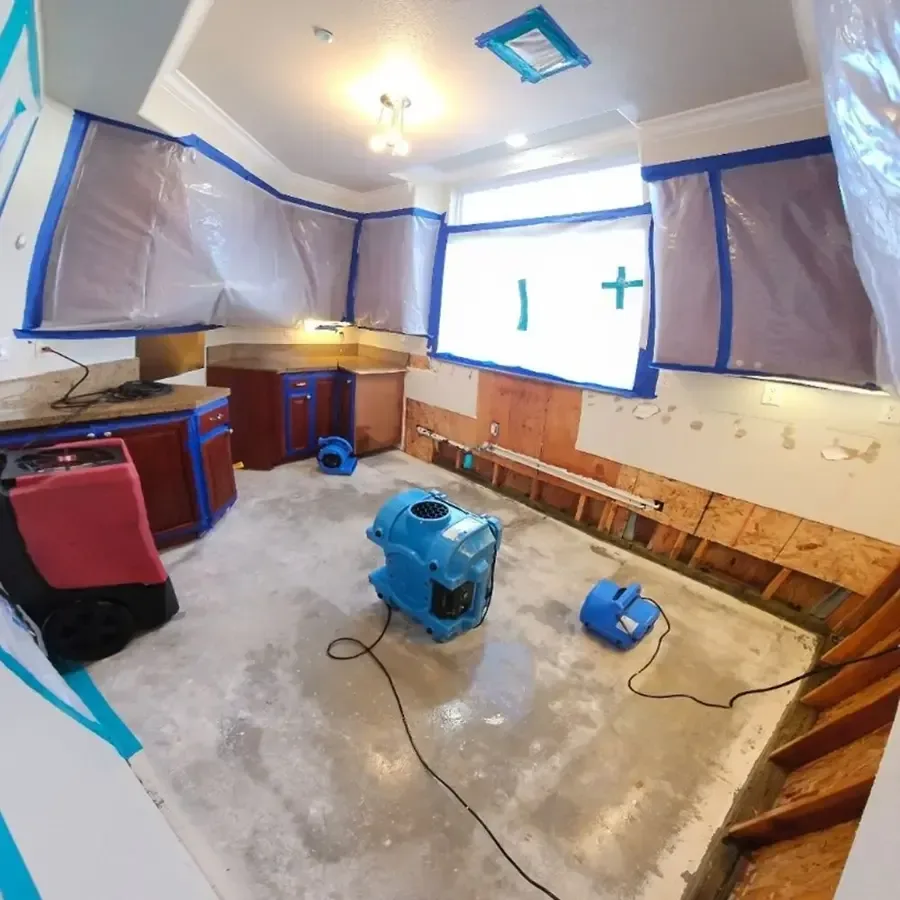
First steps when structural drying and dehumidification hits
- Keep doors and windows closed. Closing the space helps the dehumidifiers work, so open it only to move out wet items.
- Leave the equipment running. Do not shut off the machines, because a break lets humidity climb back into the walls.
- Remove what is soaked. Take out wet rugs, boxes and soft items, which release moisture back into the room while they sit.
- Keep the logs. Hold on to the readings and notes from each visit, because they show the carrier when materials were dry.
Drying follows water extraction and is a measured process, not a guess. The American Community Survey counts 5,258 housing units built in 1939 or earlier, 1,108 from 1940 to 1949 and 813 from 1950 to 1959, so many local houses have plaster walls, thick framing and old flooring that release water slowly.
What does structural drying and dehumidification cost in Hamtramck, MI?
A short dry-out of one or two rooms often costs $800 to $2,000, several rooms $2,000 to $6,000, and dense plaster, hardwood or a slab $6,000 to $15,000.
Short dry-out
- One or two rooms, light water
- Air movers and a dehumidifier
- Around three days of logs
Several rooms
- Walls and floors across rooms
- Containment and extra gear
- Psychrometric readings daily
Dense materials
- Plaster, hardwood or a slab
- Desiccant or added capacity
- Longer equipment time
Ranges are typical, not a quote: the water category, square footage, material class and how fast drying started move the number most. Run the water damage cost calculator for a closer range.
What gets measured
Readings tell the crew where water is and when it is gone, and they are taken in the same spots on every visit so the trend is clear.
- Moisture content. A meter reads wood, drywall and concrete against a dry reference for each material.
- Air conditions. Temperature and humidity are logged so the dehumidifiers are matched to the room.
- Hidden pockets. A thermal camera points to cold, wet areas that a surface check would miss, such as a wall behind a leaking pipe.
- Material class. Dense plaster and hardwood count as slow-drying and may need extra equipment.
Walls and floors still damp?
Extraction, drying and the claim file start with one call.
Equipment and airflow
Air movers push dry air across surfaces, and dehumidifiers pull the moisture out of the air. Injectors reach cavities behind walls and under cabinets, and desiccant units help in cold basements where normal units slow down.
Equipment is moved and adjusted as readings change, not left where it was first placed.
When drying ends
The job is finished when every material reaches its dry goal, not when a certain number of days has passed. Wet drywall and paper can grow mold after 24 to 48 hours, so setup happens on the first visit, and the final log goes to the carrier with the photos. A short extension costs less than a rebuild over damp framing.
How structural drying and dehumidification is handled, step by step
Baseline readings
The tech records moisture, temperature and humidity in each room so there is a starting point and a dry goal.
Equipment layout
Air movers, dehumidifiers and injectors are placed by room size, material class and the wet path found by the camera.
Daily checks
Each visit brings new readings, and equipment is repositioned or reduced as materials approach their goal.
Final log
When every reading meets the dry goal, equipment is removed and the full log and photo set are saved.
What every dry-out here is held to
Rapid local response
Dispatch runs 24/7, and active water is treated as urgent at any hour, nights and holidays included.
IICRC S500 drying standard
Moisture mapping comes first, then structural drying with air movers and LGR dehumidifiers until readings reach the dry goal.
Claim-ready documentation
Moisture maps, daily psychrometric logs and timestamped photos taken before any tear-out go into the claim file.
Lakeshore water know-how
Prewar basements, combined sewers, heavy clay and ice dams shape most losses near Lake St. Clair, and the walkthrough checks for each one.
Structural drying and dehumidification across Hamtramck and nearby
Drying crews work across ZIP 48212, including the Joseph Campau and Conant Avenue corridors, Banglatown, Ducktown, the South End and the blocks between them, in houses and multi-unit buildings.
The same service nearby: structural drying and dehumidification in Grosse Pointe, Center Line, Harper Woods.
Water damage restoration in Hamtramck › Every town covered ›
Related water damage services in Hamtramck
Structural Drying and Dehumidification questions in Hamtramck
How long does drying take?
Many jobs run about three days, though plaster, old hardwood and basement slabs can take longer. Daily readings decide when equipment can leave.
Why is the dehumidifier so loud?
It moves a lot of air and runs a refrigeration cycle to pull moisture out. The noise stops once readings show every material is dry.
Can a dry surface still be wet inside?
Yes. Walls, floors and cabinet bases often feel dry while the material behind them is not, which is why meters and a thermal camera are used.
Why are readings recorded daily?
They show whether drying is working, tell the crew when to change equipment and give the adjuster proof of the final result.
Does drying mean opening every wall?
No. Many walls dry through small injection holes or removed baseboards, and larger openings are made only where readings show trapped water.
Can furniture stay in the room?
Light pieces are usually moved to dry rooms, and heavy ones are lifted onto blocks so air reaches the floor. Anything soaked is set aside for the adjuster.
Dry it to a measured number
A dispatcher gathers the rooms and materials affected, then sends air movers, dehumidifiers and meters sized to the job.
(888) 612-9219Start the dry-out