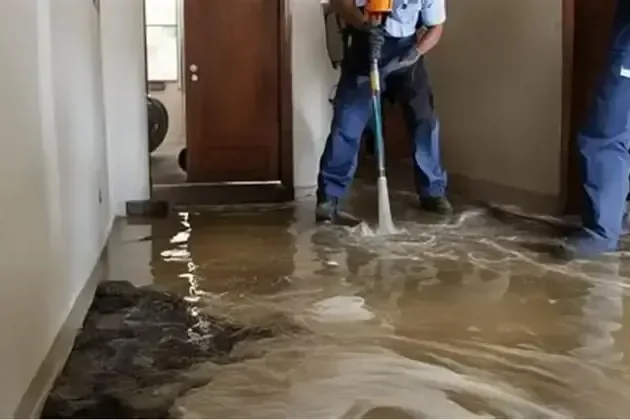
On July 6, 2019, a flash flood overwhelmed sewers and pumps in Roseville, Michigan, flooding basements and roads. News reports describe floodwater and sewage in basements on Blumfield Street near I-696, and the mayor declared an emergency two days later.
Key takeaways
- The July 6, 2019 flash flood overwhelmed sewers and pumps, and basements took in floodwater and sewage.
- The city manager said none of the city pumps failed, because the system was overwhelmed.
- Water that arrives with sewage is dirty from the start, so extraction and cleaning follow sanitary rules.
- The City Hall basement flooded too, and election voting machines were soaked.
- Drying is finished at a measured reading, not when the floor feels dry.
What happened on July 6, 2019
The storm hit as a flash flood, which means the rain came faster than the ground, the storm drains and the sewers could take it.
The water came fast. Roads and freeway service drives were part of the picture, and basements took what the sewers could not carry.
News and city statements from July 2019 put these details on the record.
- A flash flood overwhelmed sewers and pumps in the city, flooding basements and roads.
- Floodwater and sewage filled basements on Blumfield Street near I-696.
- Water poured from an I-696 service drive onto eastbound I-696 at Groesbeck.
- Hayes Road near an I-696 service drive appeared to wash out beneath new concrete.
- The mayor declared an emergency on July 8, 2019.
Why a flash flood can beat a sewer system
The city manager said in July 2019 that some manholes lifted off their bases and that none of the city pumps failed, because the system was overwhelmed.
The city annual financial report for fiscal year 2020 refers to a combined sewer and storm water system. Macomb Daily reports that the Martin Retention Basin handles combined sewer flow from the city.
What overwhelmed means
A pump can be working and still be too small for the volume that arrives. When flow exceeds capacity, the water goes to the lowest point it can reach.
In a house, that point is often a basement floor drain, a toilet or a laundry sink.
Why basements take the water first
A basement sits below the street, so water that cannot drain away has nowhere to go but down.
That is why the reports from July 2019 center on basements and low roads rather than upper floors.
Water that is dirty from the start
A flood that carries sewage is not the same as a burst pipe. The water is contaminated when it arrives, and that sets the whole plan.
The extraction crew works in protective gear, removes the water first and then removes the porous materials it soaked.
- Floodwater with sewage is Category 3 from the moment it arrives.
- Carpet, pad, insulation and low drywall are removed, not dried.
- Hard surfaces are cleaned and treated before drying begins.
- Contents that touched the water are sorted into keep, clean and discard.
First steps for a flooded basement
Start with safety, then slow the damage. The sooner standing water is out, the less it spreads into walls and framing.
Calling for water extraction as soon as the home is safe lets the crew start before the water has soaked in.
- Stay out of the water if it reaches outlets, a panel or appliances.
- Keep children and pets away from the water.
- Do not run the washer or flush toilets while a backup is possible.
- Photograph the water level and the damage.
- Move valuables and electronics to a higher floor.
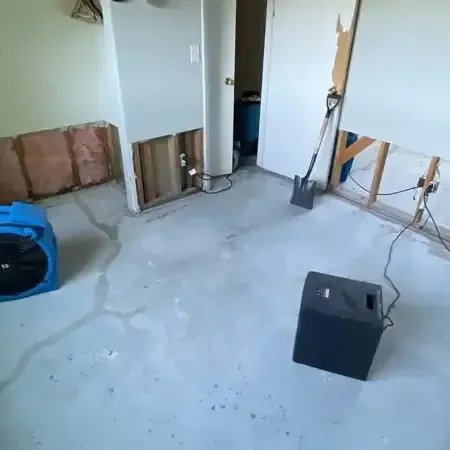
Removal, cleaning and drying
After extraction, the team removes what the water ruined and cleans what it touched. Then the structure is dried.
The steps are laid out under basement flooding cleanup, with added precautions when sewage is involved.
Each stage has a purpose, and skipping one means the next one has to be redone.
- Extraction of every inch of standing water, including from low spots and corners.
- Removal of porous material that the water touched, cut above the stain.
- Cleaning and treatment of slab, block and framing.
- Controlled drying with daily moisture readings.
- A final check against a dry reference before anything is rebuilt.
Removal and cleaning
Porous finishes are bagged and hauled out. Slab, block and framing are cleaned and treated.
Drying
Air movers and dehumidifiers run while the team logs moisture readings each visit. The room is dry when the readings match a reference, not when the surface feels dry to the hand.
What survives and what does not
Not everything in a flooded basement is lost, and sorting early saves money. The rule is simple: dense and washable items often survive, and porous ones do not.
The decision is made after the water is out, with the crew, because a soaked item can look fine before it has been cleaned and checked.
Often lost
- Carpet, pad and upholstered furniture.
- Cardboard boxes, paper and books.
- Insulation and drywall below the water mark.
Often saved
- Concrete, block and solid wood framing, after cleaning and drying.
- Metal tools, glass and hard plastic that can be washed and treated.
- Documents and photos can sometimes be dried by a specialist, if they are handled quickly.
What the City Hall basement shows
The basement of Roseville City Hall flooded in July 2019, and election voting machines were soaked. If a public building takes a hit like that, a home basement is not safe from it either.
The practical lesson is to keep valuables, electronics and files off the basement floor, and to know where the main shutoff and the panel are before a storm arrives.
Records after a flood
The mayor declared an emergency, and the storm drew attention across the city. A household with dated photos and a clear list of losses has the best record.
Records are easier to build while the damage is still visible, so photos come first and cleanup comes second.
More about local work sits on the hub for Roseville.
- Dated photos of the water, the damage and any sewage staining.
- A list of damaged items with a rough age and value.
- The drying readings from each visit.
Questions
Was Roseville flooded in July 2019?
Yes. A flash flood on July 6, 2019 overwhelmed sewers and pumps, and news reports describe floodwater and sewage in basements on Blumfield Street near I-696.
Did the city pumps fail?
The city manager said none of the pumps failed, because the system was overwhelmed.
Is flood water with sewage safe to touch?
No. Treat it as contaminated, stay out of it and let a crew in protective gear handle the extraction and cleaning.
Can carpet be saved after a flood like that?
Usually not. Carpet and pad that sat in contaminated water are removed.
How long does a flooded basement take to dry?
It depends on the depth of the water and the materials. The readings decide when the job is finished.
Why was voting equipment damaged at City Hall?
The City Hall basement flooded in July 2019 and election voting machines were soaked. It is an example of how a basement is exposed to a flash flood, even in a public building.