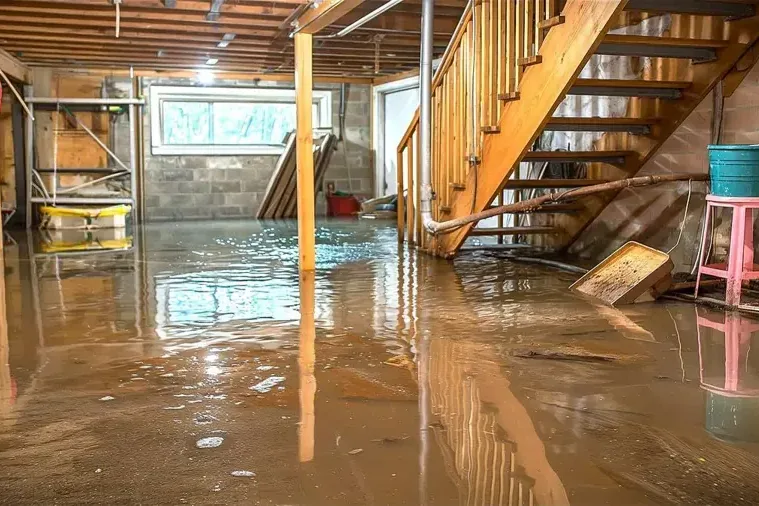
Nearly 4 inches of rain fell in the St. Clair Shores and Eastpointe area between Friday morning and before dawn on Saturday, June 26, 2021. The county says its emergency bypass spared thousands more basements, and it also says some basements flooded anyway.
Key takeaways
- The Chapaton Pump Station opened its emergency bypass early on June 26, 2021, and the county said that spared thousands more basements.
- The county also acknowledged that basement flooding still happened in some spots.
- The sewer system here carries stormwater and sanitary flow together, so basement water can be sewage.
- The county commissioner said no system can handle downpours of 4, 5 or 6 inches or more in 24 hours.
- The cleanup is the same either way: remove the water, remove what is porous, and dry to a reading.
What happened on June 25 and 26, 2021
The storm struck as a long, heavy rain rather than a short burst, which is what taxes a sewer system most.
A storm like that tests more than the sewer. Window wells fill, sump pumps run without a break and the power can fail just when a pump is needed most.
The county described the night this way.
- Friday morning, June 25: rain begins across the St. Clair Shores and Eastpointe area.
- Through the night: nearly 4 inches falls before dawn on Saturday.
- Early Saturday, June 26: the Chapaton Pump Station opens its emergency bypass.
- County statement: thousands more basements were spared, and some still flooded.
What the Chapaton bypass is
The city is served by a combined sewer, which carries stormwater and sanitary flow in the same pipes. That flow normally goes to the Conner Creek Pump Station in Detroit on its way to the Great Lakes Water Authority treatment plant.
The Macomb County Public Works Office runs the Chapaton Pump Station and the Chapaton Retention Treatment Basin on Lake St. Clair in St. Clair Shores. The pump station has an emergency bypass that discharges treated combined flow to Lake St. Clair during extreme rain.
The county says that without that discharge in a major storm, the sewage would end up in basements.
The bypass was used again in 2023
After severe storms in late August 2023, the county said the Chapaton emergency bypass was used and several thousand basements in Eastpointe and St. Clair Shores were spared.
As of that week, the bypass had been used only three times between 2017 and then, and twice that week.
The pattern is the same as in 2021: the system protects most basements, and the ones that still take water need quick extraction.
Why some basements flooded anyway
No system is sized for every storm. The county commissioner has said none can handle downpours of 4, 5 or 6 inches or more in 24 hours.
Water can also enter a basement by routes the sewer never touches.
Ways water reaches a basement
A wet basement after a big storm usually has one of three causes, and some have more than one.
- Backing up through a floor drain or a toilet when the sewer is full.
- Rain pooling against a wall and coming through a crack, a window well or a door.
- A sump pit that overflows or loses power during the storm.
Why the source matters
Drain water is sewage. Rain through a wall is cleaner at first, but it crosses soil and floors on the way in.
The source sets the protective gear and how much material is removed. It also decides whether carpet, pad and low drywall can be saved at all, which is a question the crew answers on the first visit.
If water arrives in the basement
The safest rule is to treat unknown water as contaminated, especially if it came from a drain.
A call for storm flood cleanup is the next step after the household is safe and the power is dealt with.
- Stay out of the water if outlets or the panel are wet.
- Keep children and pets away from drain water.
- Do not run the washer, dishwasher or toilets while a backup is possible.
- Photograph the water level and the damage before moving things.
- Move valuables to a dry floor above.
How the cleanup works
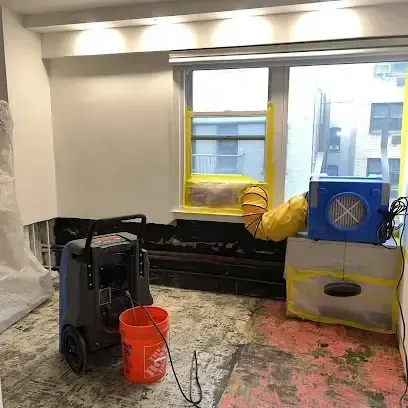
The extraction crew removes standing water first, then the team removes anything porous that the water touched. Carpet, pad, low drywall and stored cardboard are the usual losses.
The slab and walls are cleaned, treated where needed and dried with air movers and dehumidifiers. This is the work of basement flooding cleanup when water has been inside for a while.
Drying is logged with moisture readings until the structure reaches a dry standard.
What the first visit looks like
The team confirms the water source, checks for electrical hazards and starts extraction. The moisture map comes next, followed by removal of porous material.
By the end of the first visit the room is usually down to a wet slab and open walls, with equipment running and a plan for the next readings.
Records after a flood
After the June 2021 storm the city posted a FEMA Assistance notice dated September 25, 2021 that mentioned basement flooding issues and the FEMA helpline.
Good records make any later conversation easier. Keep them organized and keep them dated.
- Photos taken before anything is removed.
- A room by room list of damaged items.
- Notes on when the water arrived and where it entered.
- Moisture readings and the drying log from each visit.
Getting the house ready for the next big storm
A few checks in dry weather lower the odds that water reaches a basement, and they make the cleanup smaller when it does.
None of them replaces the sewer system, but all of them reduce what a homeowner can control. More on the local picture sits on the Eastpointe hub.
- Clear window wells and make sure the covers fit.
- Test the sump pump, check its float and plan for a power loss.
- Move valuables, files and stored cardboard off the floor.
- Know where the panel and the main shutoff are before the storm arrives.
- Keep floor drains uncovered and free of debris.
Why the quick checks matter
A sump pit that has been tested in dry weather is a pit that is more likely to work in a downpour. A window well that is clear drains faster than one packed with leaves.
When the water still arrives, a smaller wet area is cheaper and quicker to dry.
Questions
What was the Chapaton emergency bypass used for in June 2021?
It discharged treated combined flow to Lake St. Clair during extreme rain. The county said it spared thousands more basements in St. Clair Shores and Eastpointe.
Did basements still flood in June 2021?
Yes. The county acknowledged that basement flooding still happened in some spots.
Is basement water here always sewage?
Not always. Rain through a wall or window well is different from a drain backup, but the sewer carries stormwater and sanitary flow together, so drain water is handled as sewage.
Was the bypass used again after 2021?
Yes. After storms in late August 2023 the county said it was used again and several thousand more basements were spared.
Why does a combined sewer matter to a homeowner?
Rainwater and household wastewater share the same pipes, so a heavy rain can push that mixed flow back up through the lowest drain in the house, which is often the basement floor drain.
What should be kept for records?
Dated photos, a list of damaged items, the drying readings and any notices from the city or county.