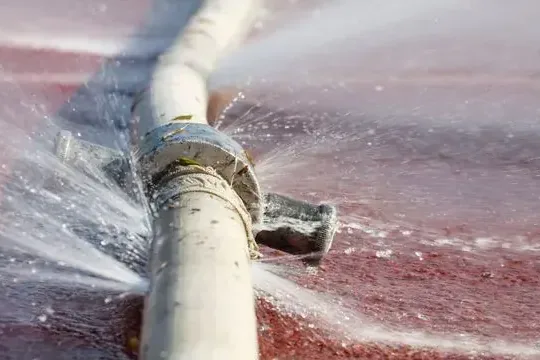
When water shows up where it should not, the first question is where the pipe broke. In Center Line the City owns and maintains the water service pipe from the main to the customer property boundary, usually the curb stop, and the property owner is responsible from that point to the home.
Key takeaways
- The city handles the water service pipe up to the curb stop, and the owner handles it from there to the home.
- A leak inside the house is always the owner side, so close the main valve first.
- Water in the yard or street near the curb stop is a report to the Department of Public Works.
- The City says some homes have lead service pipes, and those homes were built before the 1950s.
- Water from a burst supply pipe starts clean, so quick extraction keeps it that way.
The split at the curb stop
The curb stop is a valve near the property boundary. It marks where the city pipe ends and the private pipe begins.
That boundary decides who pays for a repair and who is called first.
The city side
The City of Center Line owns and maintains the pipe from the water main to the property boundary. The Department of Public Works handles that side.
The owner side
From the curb stop to the house, and everything inside the house, belongs to the property owner. That includes the pipe, the main valve and every fixture.
Why the boundary matters in practice
A homeowner who calls a plumber about a leak on the city side will be sent to the city, and the reverse is true for a leak on the owner side. Knowing the boundary saves time when water is running.
It also helps the cleanup crew, because the extraction starts at once while the right party is called for the repair.
Finding where the leak is
Water in the yard or street is a different case from water in the basement. The signs usually point to the side of the boundary.
A wet spot between the curb stop and the house points to the owner side as well, even though it is outside the walls.
- Water pooling near the curb or the street points to the city side.
- A soggy patch in the yard between the curb stop and the house points to the owner side.
- Water on a basement wall or floor, or a hissing sound inside, points to a pipe in the house.
- A sudden drop in water pressure or a meter that keeps moving with everything off is a sign of a hidden leak.
If the pipe broke inside the house
A burst pipe inside a house empties onto the floor and runs down through whatever is below. The first step is to stop it.
A supply pipe at full pressure moves a great deal of water quickly, along the floor to the lowest spot, through floor openings and into walls. A short delay can turn one wet room into three.
Once the water is off, water extraction removes the water before it soaks into carpet, drywall and framing.
- Close the main water valve inside the house.
- Open the lowest tap to drain the pipes.
- Turn off power to any area where water reaches outlets, if it can be done safely.
- Photograph the burst pipe and the wet areas.
- Move belongings out of the path of the water.
Hidden leaks and the water meter
A pipe can leak for weeks without a puddle, especially in a slab or behind a finished wall. The water meter is the simplest tool for finding it.
A quick test can show whether the house is losing water.
- Turn off every tap and every appliance that uses water.
- Read the meter and look at the small leak indicator if it has one.
- If the dial or the indicator keeps moving with everything off, water is leaking somewhere.
- Check the pipe run from the meter to the house for wet ground, which points to the owner side.
Older homes and the lead service pipe
About half of the housing units in Center Line, 1,892 of 3,754, were built before 1960. The City says some homes have lead service pipes, and those homes were built before the 1950s and are normally single family houses.
That is a fact about pipe material, not about a leak. When a service pipe is replaced, the work is done on the owner side by a plumber and on the city side by the city.
Older homes also tend to have older valves. A main valve that has not been turned in years can stick, so it is worth testing once a year while nothing is wrong.
Cleanup after a supply pipe burst
A supply pipe moves a lot of clean water in a short time. The water is clean at first, which makes quick extraction the best way to keep it that way.
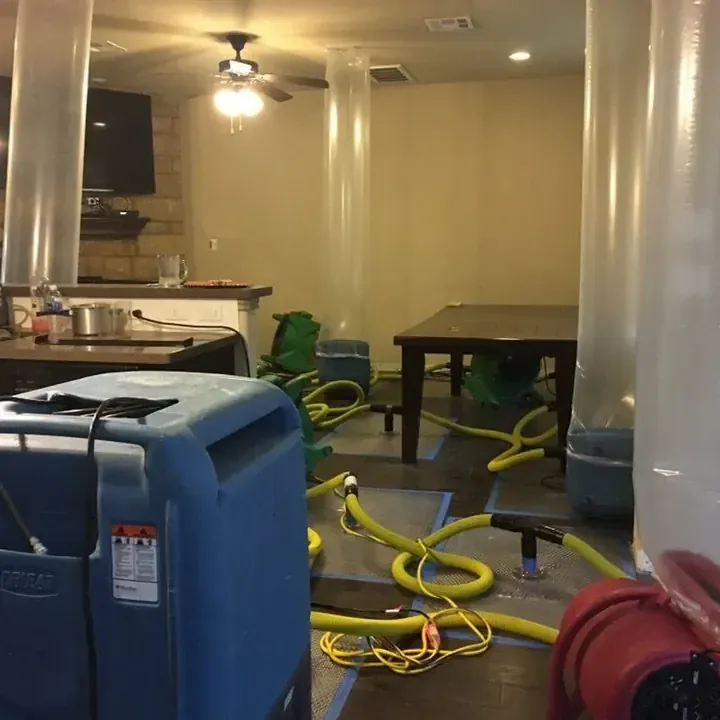
The team removes standing water, checks the walls and floor with moisture readings, and opens what is wet. This work is covered under burst pipe water damage, where the sequence is laid out.
What the crew does
- Extracts standing water and wet carpet pad.
- Opens walls or ceilings where readings are high.
- Dries the structure with air movers and dehumidifiers.
- Logs readings until they match a dry reference.
What stays with the plumber
The plumber repairs or replaces the broken pipe. The drying work runs alongside that repair.
Permits, who to call and what to keep
The City permit page lists building, plumbing, mechanical, electrical, sewer and concrete permit applications. A plumber can say whether a repair needs one.
The Department of Public Works lists an after hours and weekend emergency contact for public works. More local detail sits on the Center Line hub.
- Photos of the broken pipe, the water and the damage.
- The plumber invoice and any permit paperwork.
- A list of damaged belongings with a rough value.
- The drying readings from each visit.
Questions
Who is responsible for the water service pipe in Center Line?
The City owns and maintains the pipe from the water main to the property boundary, usually the curb stop. The owner is responsible from that point to the home.
What if the burst is inside the house?
That is the owner side. Close the main valve inside the house, call a plumber and call for extraction and drying.
What if water is bubbling up near the curb?
That is a city side report. Contact the Department of Public Works and keep clear of the area until it is looked at.
Does a burst pipe always flood the whole house?
No. It depends on where the pipe is and how fast the valve is closed, but water moves through walls and floors faster than it looks.
Does the cleanup crew repair the pipe?
No. A plumber repairs the pipe. The crew extracts the water, opens wet materials and dries the structure.
How can the owner check for a hidden leak?
Turn everything off and watch the water meter. If it keeps moving, water is leaking somewhere between the meter and the fixtures.