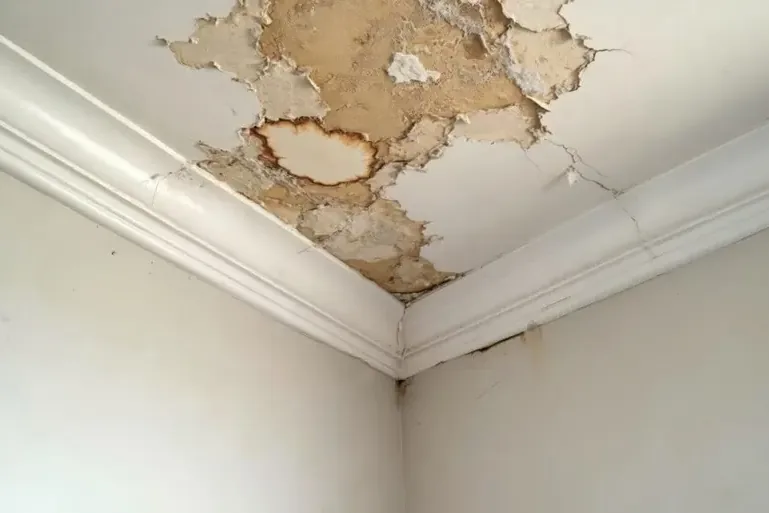
A drip from the ceiling in an apartment rarely starts in that apartment. In Harper Woods, where 750 housing units sit in multi unit apartment buildings, water from a tub, a toilet or a washer upstairs often reaches the ceiling below first.
Key takeaways
- The source is usually the unit above, so tell that household and the property manager as soon as the stain appears.
- A bulging or sagging ceiling holds a lot of water and can fall, so keep people out from under it.
- Photograph the stain, the source and the date before anything is touched.
- The wet ceiling cavity is opened and dried, because the surface can look dry while insulation and joists stay wet.
- About 39.1 percent of occupied units here are rented, so shared responsibility is common and written notice helps.
Why leaks travel down in multi unit buildings
A 2020 American Community Survey estimate in the city Master Plan counts 5,763 housing units, with 750 of them in multi unit apartment buildings. In 2020 about 39.1 percent of occupied units were renter occupied, up from 17.8 percent in 2000.
Where homes are stacked, one failed hose or overflowing tub sends water down through the floor and into the ceiling below.
How water moves through the floor
Water goes down along pipes, through gaps around fixtures and into the joist bays under the floor above. It then spreads sideways before it ever shows on the ceiling.
That is why a small stain can mean a large wet area.
Duplexes and the vacant unit upstairs
The same estimate counts 30 two family units, and the southwest corner of the city is zoned for duplexes. A leak in one half of a duplex can reach the other half just as it does in a larger building.
About 592 housing units, or 10.3 percent, were vacant in 2020. A pipe that fails in an empty unit can run for days before anyone notices.
Common sources in the unit above
Most upstairs leaks come from a short list of fixtures, and many of them have nothing to do with how carefully a household lives.
- Tub or shower overflow, or a failed seal around the drain.
- A toilet supply hose or a wax ring that has let go.
- A washing machine hose or drain pipe, which is why washer and appliance leaks belong in the same conversation.
- A dishwasher or sink supply connection that weeps.
- A hot water supply pipe that has pinholed inside the wall.
Signs of a hidden leak above
Not every ceiling leak announces itself with a drip. Many start as a faint ring that grows each week, and a slow leak can soak insulation and framing long before the drywall shows it.
- A brown or yellow ring on the ceiling that spreads after the unit above uses water.
- Paint that bubbles, peels or stays tacky near a bathroom or kitchen wall.
- A musty smell in a closet or hallway with no visible source.
- A faint sound of dripping in the wall when no one is using water.
First steps for the household below
Safety is first. A ceiling that bulges holds a lot of water, and wet drywall is heavy.
Move belongings and furniture out of the wet area, then set a container under any drip.
- Keep people and pets out from under a bulging or sagging ceiling.
- Switch off light fixtures and fans on the wet part of the ceiling.
- Tell the household above to stop using the water source.
- Notify the property manager in writing right away, with dated photos.
- Do not puncture the ceiling unless it is sagging, and then only to let the water into a bucket, from a safe angle.
How the wet ceiling is dried
The drying team first finds how far the water spread, using a moisture meter and a thermal camera on the ceiling and nearby walls.
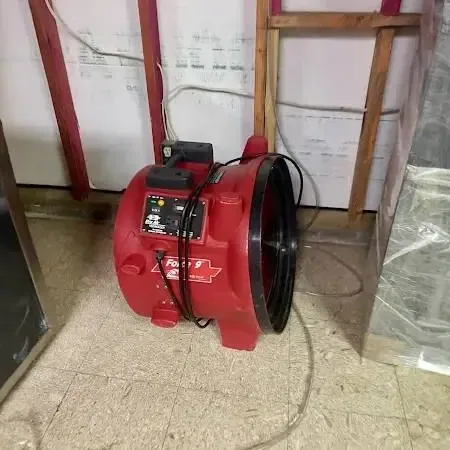
Wet insulation is removed, the ceiling is opened where it is saturated, and the cavity is dried with airflow and dehumidification. Details of the scope sit with ceiling leak water damage.
What is inside a wet ceiling
Above the finished surface sit insulation, wiring, light fixtures and the joists that carry the floor above.
Each of them can hold water, which is why the opening is made where the readings are high rather than only where the stain is visible.
Clean water and dirty water
Water from a clean supply pipe is easier to handle than water that has crossed a floor and picked up dust and debris.
If the water came from a toilet or a drain, it is handled as contaminated and the materials it touched are removed.
Records, rules and shared responsibility
With rentals a large part of the housing here, the lease and the cause of the leak shape who handles the repair.
The city Building Department enforces construction, occupancy and property maintenance codes, including residential rental inspection.
Keeping the restoration team in the loop with the property manager helps the repair order and the dry record stay clear.
- Dated photos of the source, the stain and the damage as it grows.
- A list of damaged belongings with rough values.
- Copies of messages to the property manager and the household above.
- The drying readings from each visit.
What to put in the written notice
A short, dated message does more than a phone call, because it can be found later. Plain facts work best.
- The unit number, the room and the date the stain appeared.
- A photo of the stain with something in the frame for scale.
- Whether the water is still coming and whether anyone has shut it off.
- A request for access so the source can be found and the ceiling dried.
Keeping a repeat from happening
A few cheap checks catch most upstairs leaks before they reach a ceiling.
The fixtures are the same everywhere, and the repair work for any of them is laid out on the hub for local restoration.
- Replace old rubber washer hoses with braided ones and check them each year.
- Look under sinks and behind toilets for damp and corrosion.
- Do not leave a tub running unattended.
- Know where the shutoff valve is for the unit.
Questions
Who should be told first about a ceiling leak from above?
Tell the household above so they can stop the source, then the property manager in writing. Take photos before anything is moved.
Can a wet ceiling dry on its own?
The surface may dry, but insulation and joists above can stay wet. The ceiling is opened and the cavity dried to a measured reading.
Is a bulging ceiling dangerous?
It can be. It holds water and can fall, so keep people out from under it and let the drying team open it in a controlled way.
Can a washer leak in an upstairs unit cause this?
Yes. A hose or drain failure can send a lot of water through the floor, which is why the appliance is checked as the source.
How long does a ceiling take to dry?
It depends on the materials and how long they sat wet. The readings decide when the dry out is finished.
What if the unit above is empty?
Tell the property manager right away, because a pipe in an empty unit keeps running until someone shuts off the water to it.