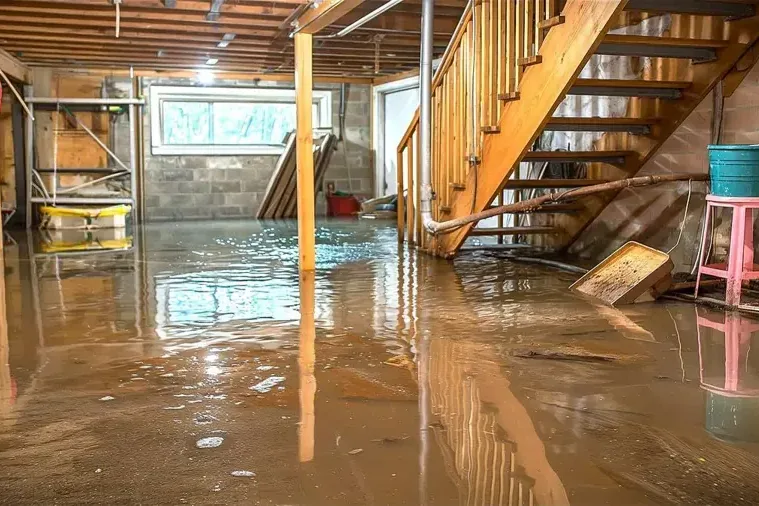
Grosse Pointe is mostly brick and frame homes built before World War II, nearly all with full basements, and many of those basements were finished as recreation rooms. When water gets in, the work is part rescue and part sorting: what can be saved, what has to come out, and what must dry before anyone rebuilds.
Key takeaways
- Stay out of the basement if water touches outlets, a panel or a plugged in appliance, and cut power only from a dry spot.
- Carpet, pad, paneling and the bottom of framed walls come out first, while the slab and block walls are dried in place.
- Water that rose through a floor drain is sewage, and anything porous it touched is removed.
- Clay soil holds water against the foundation, so seepage can continue after the rain has stopped.
- Drying ends at a measured dry reading, not on a set day.
Why a finished basement floods differently
A bare basement shows its water. A finished one hides it behind paneling, carpet and framed walls, so the real damage is usually larger than the puddle suggests.
The lake plain clay under local streets holds water against foundation walls, so seepage can keep coming after the sky has cleared. A basement can look better in the evening and worse the next morning.
What the finishes hide
Each layer of a rec room can hold water long after the puddles are gone.
- Carpet and pad: a soaked pad stores water for days and wicks it back up.
- Paneling and drywall: water climbs the lower walls by wicking, well above the visible stain.
- Framed walls: insulation and the bottom plate stay wet behind a surface that looks fine.
- Built in cabinets and bars: particle board swells and does not return to shape.
Why the walls matter more than the floor
Block and poured concrete are not harmed by water, but everything fastened to them is.
The goal is to open the wet finishes so the wall can release its moisture into moving air instead of into the room.
The first hours: safety before cleanup
A finished basement usually holds outlets, a panel, a furnace and a laundry area, so safety comes before any cleanup. Wet electrical equipment and standing water do not mix, and the danger is easy to miss from the stairs.
Once the space is safe, water extraction comes first, because standing water keeps pushing moisture into pad, trim and the base of the walls. Every extra hour of water on the slab makes the drying job longer.
- Stay out if water reaches outlets or the panel, and shut off power only from a dry spot.
- Do not wade into deep water, where steps and floating debris hide.
- If water came up through a floor drain, keep children and pets away and treat it as sewage.
- Close the supply valve if a pipe or a tank is the source.
- Photograph the high water mark on the walls before anything is moved.
What comes out first
The crew sorts by how porous a material is and how long it sat wet. Porous things go first, dense things stay.
The cut height on a wall is set by a moisture meter rather than by the visible stain, because wicking carries water above the mark. That sorting is the core of basement flooding cleanup, and it decides how much of the room has to be rebuilt.
Usually removed
- Wall to wall carpet and pad.
- Paneling and drywall at the stain, cut above it.
- Wet insulation in the wall bays.
- Particle board furniture, books and upholstered pieces that cannot dry quickly.
Often saved
- The slab and block walls, which are dried where they stand.
- Solid wood and metal furniture, which is cleaned and dried.
- Framing lumber, which is dried to a reading and checked again.
Why a floor drain changes the plan
Water that enters a basement rarely stays clean. It picks up soil, dust and whatever was stored on the floor.
Floor drains here are tied to the sewer. If the water rose through that drain, the job becomes a sewage cleanup, and carpet, pad and porous finishes it touched are not saved.
The water category sets the protective gear, the amount of material removed and the treatment of the surfaces left behind.
- Category 1: a clean source such as a broken supply pipe, caught early.
- Category 2: water with some contamination, such as a washer discharge or a slow leak.
- Category 3: sewage, drain backups and surface water that came in from outside.
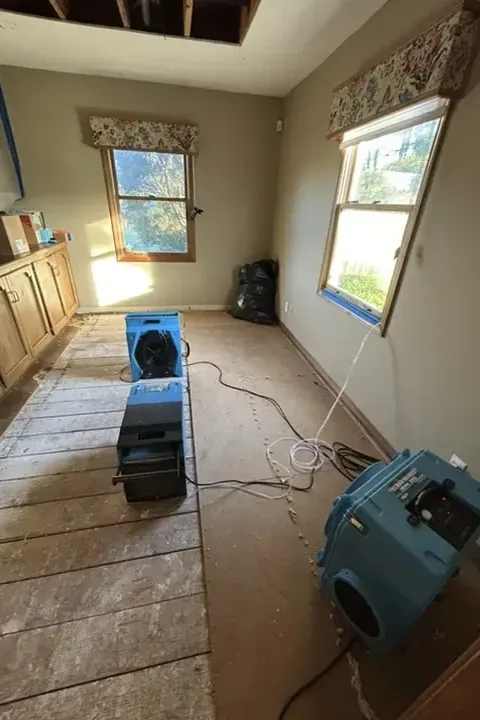
Drying the slab, block walls and framing
Once wet finishes are out, the drying team sets air movers and dehumidifiers and maps moisture so the plan follows the readings. Structural drying in a basement runs slowly because concrete and block give up water gradually.
The team returns to take readings on the walls, the slab and the framing, and moves equipment as the wet area shrinks.
The job ends when readings match a dry reference. The drying time estimator gives a rough range, and the readings give the real answer.
What each visit checks
- Readings on slab, block and wood at the same spots each time.
- Air temperature and humidity in the room.
- Airflow and equipment placement.
- Any new damp spot along a wall or a floor joint.
How the days usually run
The first day is extraction, a moisture map and removal of soaked carpet and pad. The next visits open walls, set equipment and start the daily readings.
Later visits are shorter, because the readings only confirm that the room is drying as planned.
Mistakes that make a basement flood worse
Most of the avoidable damage in a basement flood comes from a handful of habits.
None of them looks harmful in the moment, which is why they are worth listing.
- Closing the door and leaving the room to dry by itself, which keeps humid air trapped.
- Running a household vacuum over a wet floor.
- Stacking wet items in a dry corner, where they release water into the wall.
- Turning the furnace up to dry the room, which can push moisture into framing.
- Rebuilding over wet walls because the surface feels dry.
Contents, rebuilding and what to keep
Move safe items to a dry room and leave the rest where they sit until they are photographed.
Rebuilding starts only after the readings are dry. New paneling or drywall over a damp wall traps moisture and brings the musty smell back.
- Photograph every item and the damage before moving anything.
- List lost contents with a rough age and value.
- Hold new carpet and paneling until the drying team confirms dry readings.
- Keep any receipts for emergency purchases and repairs.
Questions
Can carpet in a flooded basement be saved?
Clean water that is removed quickly sometimes lets the carpet survive, but the pad almost never does. If the water came from a floor drain or from outside, the carpet is removed.
How long does a flooded basement take to dry?
Usually several days, and the readings decide. Concrete and block release water slowly, so a basement often runs longer than a room above ground.
Why is drywall cut above the stain?
Water wicks upward, so a cut a little above the visible mark removes wet material and lets air reach the bottom plate. Stopping at the stain leaves wet material behind.
Is the basement safe to use once the water is gone?
Only after wet materials are out and the readings are dry. Until then the space can hold damp, contaminated material and a lingering odor.
What if water keeps seeping in after the rain stops?
Saturated clay can keep pushing water through joints and walls for some time. Keep the extraction going, tell the team, and find the entry point before anything is rebuilt.
Can a dehumidifier from a hardware store do the job?
A household unit helps with humidity, but it does not pull water out of block, concrete and framing fast enough. Dry out equipment moves far more air and is placed from the moisture map.